
How ChatGPT Is Changing Facebook Conversations in 2026
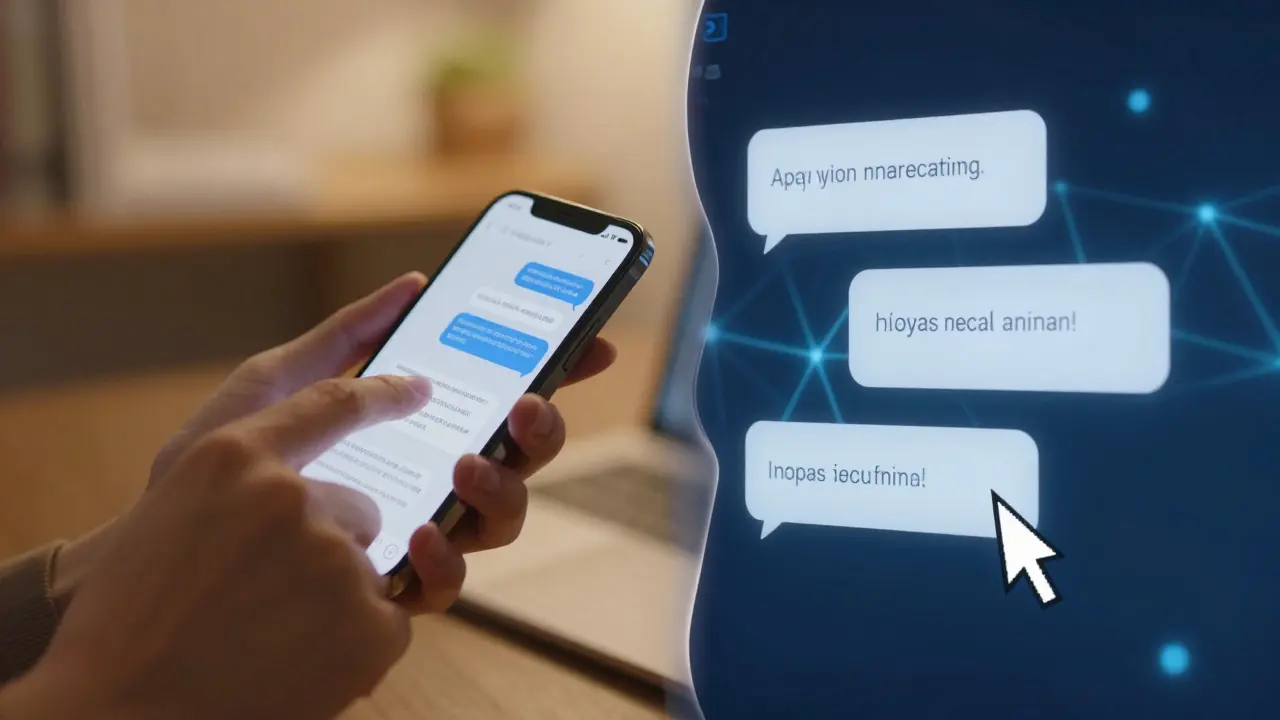
Remember when replying to a message on Facebook meant actually typing out a response? Those days are fading fast. In 2026, the way we communicate on the world’s largest social network has shifted dramatically. It is no longer just person-to-person; it is increasingly person-to-AI and AI-to-person. At the center of this shift is ChatGPT, an advanced language model developed by OpenAI that generates human-like text responses based on user prompts. While Meta has its own AI tools, ChatGPT’s integration into third-party apps, browser extensions, and business workflows has revolutionized how conversations happen on the platform.
You might be wondering if your friend really wrote that witty comeback or if an algorithm did the heavy lifting. The line is blurry. For businesses, this isn't about deception; it's about scale. For users, it's about convenience. This article breaks down exactly how ChatGPT is reshaping Facebook interactions, from automated customer support to personal messaging assistance, and what you need to know to navigate this new landscape effectively.
The Rise of AI-Assisted Messaging
The core change is simple: speed and tone. People are busy. We have dozens of open threads in Facebook Messenger, Meta's instant messaging service that allows users to send messages, photos, videos, and voice notes.. Answering them all with perfect grammar and appropriate emotion takes time. ChatGPT steps in as a co-pilot.
Users now employ browser extensions and mobile keyboard integrations powered by large language models (LLMs) like ChatGPT to draft replies instantly. You paste the incoming message, ask for a "friendly but firm" response, and get three options in seconds. This reduces cognitive load. Instead of staring at a blinking cursor, you select, tweak, and send. The result? Conversations feel more polished, even when the sender is exhausted or non-native in English.
- Drafting: Generate initial responses for complex questions.
- Tone Adjustment: Rewrite angry drafts into professional statements.
- Translation: Break down language barriers in real-time chats.
This utility is not limited to casual chats. Small business owners use these tools to manage community groups and private messages without hiring a full-time social media manager. The efficiency gain is massive, allowing one person to handle hundreds of inquiries daily.
Transforming Customer Service for Businesses
For brands, Facebook is a storefront. When a customer asks, "Is this in stock?" or "What is your return policy?", they expect an immediate answer. Waiting hours for a human reply kills sales. Here, ChatGPT-powered bots shine.
Unlike the rigid, rule-based chatbots of the past that only understood specific keywords, modern LLMs understand context. If a user says, "I hate my shoes," a basic bot might fail. A ChatGPT-integrated system recognizes sentiment, identifies the product issue, and responds with empathy while offering a solution. These systems can be trained on a company’s specific knowledge base, ensuring accurate answers about pricing, shipping, and policies.
| Feature | Traditional Rule-Based Bot | ChatGPT-Powered Assistant |
|---|---|---|
| Understanding Context | Poor (relies on exact keywords) | High (understands intent and nuance) |
| Response Time | Instant but often irrelevant | Instant and relevant |
| Sentiment Analysis | Limited | Advanced (detects anger, joy, confusion) |
| Customization | Requires coding changes | Updated via prompt engineering/knowledge base |
Businesses report significant reductions in response times and increased customer satisfaction scores. However, there is a catch. If the AI hallucinates-makes up facts-it can damage trust instantly. Therefore, the best implementations include a "human-in-the-loop" fallback for sensitive issues like refunds or complaints.

Impact on Social Dynamics and Authenticity
As AI drafting becomes common, a philosophical question arises: Are our online interactions still authentic? If half of the comments in a heated political debate are refined by ChatGPT, does the discourse improve or degrade?
On one hand, AI can de-escalate conflicts. By smoothing out aggressive language, it prevents misunderstandings. On the other hand, it creates a homogenized communication style. Everyone starts sounding polite, structured, and slightly corporate. This loss of idiosyncrasy-the typos, the slang, the unique voice-is what makes social media feel human.
Furthermore, there is the risk of manipulation. Bad actors can use ChatGPT to generate convincing fake reviews, spam comments, or phishing messages at scale. Meta has been updating its detection algorithms to flag synthetic content, but it is an arms race. Users must remain vigilant, checking links and verifying sources, even if the message sounds perfectly reasonable.
Integration Challenges and Privacy Concerns
While the benefits are clear, integrating ChatGPT into Facebook workflows is not without hurdles. Data privacy is the biggest concern. When you use a third-party tool to process your Facebook messages, where does that data go?
If you copy-paste sensitive information into a public AI interface, you risk exposing personal details. Enterprise solutions offer better security, keeping data within private instances, but these come at a higher cost. For individual users, the temptation to use free, unsecured tools is high. Always check the privacy policy of any extension or app that accesses your Messenger data.
Additionally, Meta itself is pushing its own AI assistant, Meta AI, directly into Messenger. This creates competition. Why use ChatGPT when Meta offers a native, integrated solution? The answer lies in flexibility. ChatGPT can be customized more deeply for specific brand voices or complex reasoning tasks than the general-purpose Meta AI, which is designed for broad consumer use.

Best Practices for Using AI on Facebook
To leverage ChatGPT effectively without losing your humanity or compromising security, follow these guidelines:
- Always Review Output: Never send an AI-generated message without reading it first. Add a personal touch-a nickname, a shared memory-to ensure authenticity.
- Protect Sensitive Data: Do not input passwords, financial info, or highly private personal details into AI tools unless using a verified, secure enterprise platform.
- Disclose Automation: If you are a business, let customers know they are chatting with an AI. Transparency builds trust. A simple "Hello! I'm an AI assistant..." goes a long way.
- Monitor for Hallucinations: Regularly audit AI responses to ensure accuracy. Incorrect advice can lead to legal liabilities for businesses.
- Balance Human Touch: Use AI for routine queries, but reserve complex emotional conversations for human agents.
The Future of Facebook Communication
We are only at the beginning of this evolution. As models become smaller, faster, and more integrated into operating systems, the distinction between human and AI writing will vanish entirely. By late 2026 and into 2027, expect real-time translation to be seamless, making language barriers obsolete. Imagine chatting with someone in Tokyo as if they were in Calgary, with zero delay and perfect cultural nuance.
Moreover, multimodal AI will allow for richer interactions. Instead of just text, AI will help generate images, videos, and voice notes within Messenger. The creative barrier to entry drops further, enabling everyone to produce high-quality content effortlessly.
However, the value of genuine human connection may rise. In a sea of AI-generated perfection, raw, unfiltered human interaction could become a premium feature. People might seek out "verified human" badges or communities that ban AI assistance to preserve authenticity.
ChatGPT is not replacing Facebook conversations; it is augmenting them. It handles the mundane, the repetitive, and the linguistic complexities, freeing us to focus on what truly matters: building relationships. The key is to use it as a tool, not a crutch. Keep your voice, protect your data, and stay aware of who-or what-you are talking to.
Can ChatGPT read my Facebook messages directly?
No, ChatGPT does not have direct access to your Facebook account. You must manually copy and paste text into the ChatGPT interface or use a third-party browser extension that requests permission to view your screen or clipboard. Always be cautious about granting such permissions.
Is it against Facebook's rules to use AI for messaging?
Using AI to assist in drafting messages is generally acceptable. However, using bots to spam, harass, or deceive users violates Meta's Community Standards. Automated mass-messaging without user consent is strictly prohibited and can lead to account bans.
How can I tell if someone is using AI to reply to me?
It is difficult to detect definitively. Signs include overly formal language, perfect grammar, generic responses, and rapid reply times to complex questions. If the conversation feels impersonal or lacks specific references to previous interactions, AI assistance is likely involved.
Does Meta have its own alternative to ChatGPT?
Yes, Meta has launched Meta AI, which is integrated directly into Facebook and Messenger. It uses Llama-based models and is designed to answer questions, find information, and assist with tasks within the Meta ecosystem without needing external tools.
Is it safe to share personal details with AI chatbots on Facebook?
Never share sensitive personal information like passwords, credit card numbers, or social security numbers with any AI chatbot, whether native or third-party. Data privacy policies vary, and there is always a risk of data leakage or misuse.