ChatGPT for Advertising: How AI Is Reinventing Campaigns in 2026

Remember when writing a single Facebook ad took you twenty minutes of staring at a blinking cursor? Those days are gone. In 2026, ChatGPT is an advanced large language model developed by OpenAI that generates human-like text based on prompts. It has become the engine behind modern generative AI advertising, allowing teams to produce hundreds of ad variations in seconds rather than hours. But simply swapping out your copywriter for a bot isn’t the magic trick. The real shift is how marketers use this technology to personalize messages at scale, test creative hypotheses faster, and optimize budgets with data-driven precision.
If you’re trying to figure out where to start, you aren’t alone. Many brands are still treating ChatGPT like a fancy autocomplete tool. They miss the bigger picture: it’s a strategic partner for ideation, segmentation, and optimization. This guide cuts through the hype and shows you exactly how to deploy ChatGPT for advertising to get measurable results, avoid common pitfalls, and stay ahead of competitors who are already automating their creative workflows.
The Core Shift: From Static Copy to Dynamic Personalization
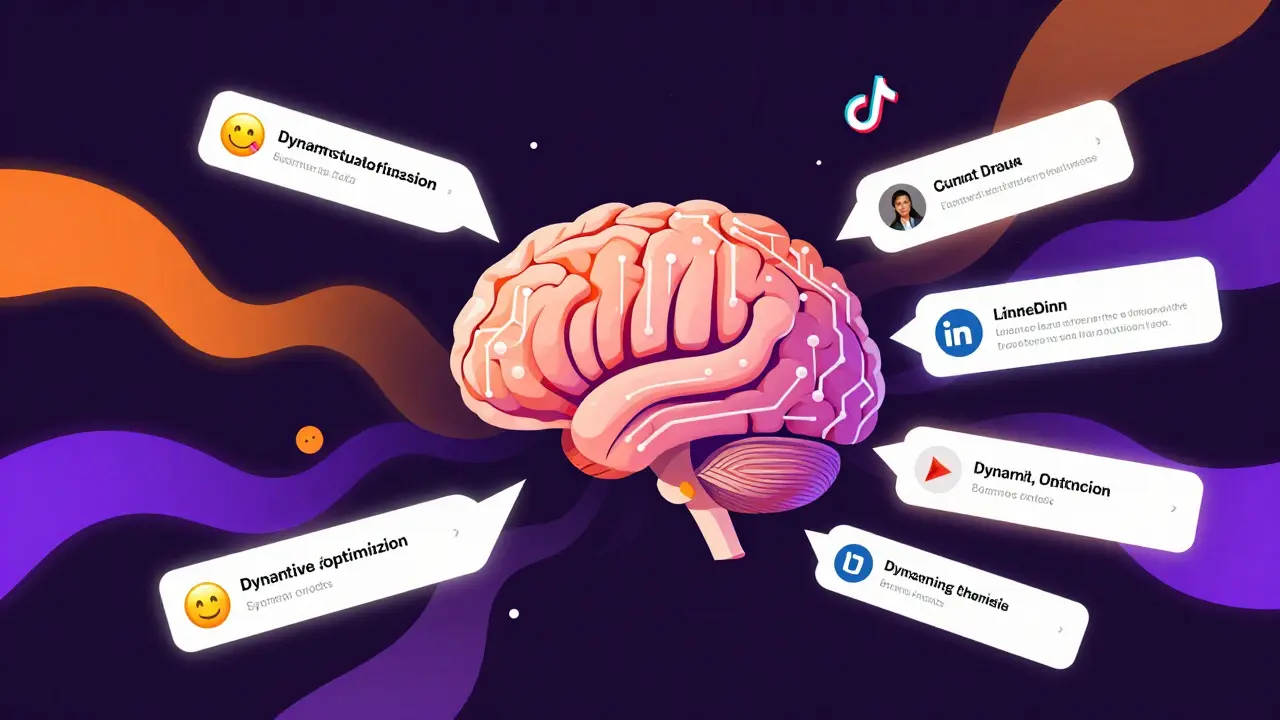
Traditional advertising relied on broad segments. You might have targeted "women aged 25-34" with one generic message. That approach feels blunt now. Consumers expect relevance. If I’m looking for running shoes, I don’t want an ad about hiking boots just because I bought them last year. ChatGPT enables dynamic creative optimization (DCO) is a programmatic advertising technique that automatically selects and assembles the most relevant ad elements for each user. By feeding specific user data points into the model, you can generate unique headlines, body copy, and calls-to-action tailored to individual behaviors.
Here’s how it works in practice. Instead of writing one email blast, you create a prompt template that pulls in customer purchase history, browsing behavior, and location. ChatGPT then drafts ten distinct versions of the same offer. One version highlights durability for a user who reads product reviews; another emphasizes speed for someone who clicked on 'fast shipping' filters. This level of granularity was impossible before because it required too much manual labor. Now, it’s automated.
This shift also changes how we think about brand voice. Consistency used to mean using the exact same words everywhere. Today, consistency means maintaining tone and values while adapting the message format to the channel and the person. ChatGPT helps maintain that thread across thousands of interactions without losing the human touch-if you guide it correctly.
Practical Applications: Where ChatGPT Adds Real Value
Let’s look at concrete ways advertisers are using this tool right now. These aren’t theoretical concepts; they are daily tasks for many marketing teams.
- Ideation Storming: Stuck on a campaign theme? Ask ChatGPT to brainstorm fifty angles for a new skincare line targeting men over forty. It will give you options ranging from humor to science-backed claims. You filter the weak ones and polish the strong ones. This saves days of blank-page anxiety.
- A/B Testing Variations: You need to test three different hooks for a LinkedIn ad. ChatGPT can generate five variations of each hook instantly. You launch them all, see which performs best, and double down. Speed is the key advantage here.
- Landing Page Optimization: High bounce rates often stem from mismatched messaging between the ad and the landing page. Use ChatGPT to rewrite landing page headers so they mirror the exact phrasing of your top-performing ads. This alignment boosts conversion rates significantly.
- Social Media Captioning: Instagram and TikTok require different tones. ChatGPT can take one core message and adapt it into a casual, emoji-heavy caption for TikTok and a more professional, concise post for LinkedIn.
One major benefit is cost efficiency. Freelance copywriters charge per word or per project. While their quality is high, scaling up requires hiring more people. With ChatGPT, you pay a flat subscription fee regardless of volume. For small businesses and startups, this democratizes access to high-quality creative output.
Building Effective Prompts for Ad Copy
The quality of your output depends entirely on the quality of your input. A vague prompt like "write an ad for coffee" yields generic, forgettable text. To get useful results, you need structure. Think of prompting as giving instructions to a junior intern who knows everything about grammar but nothing about your business.
Use the PAS framework (Problem-Agitate-Solution) combined with specific constraints. Here is a template that works well:
"Act as a senior copywriter for [Brand Name]. Write three Facebook ad headlines targeting [Audience Segment]. The goal is to drive clicks to a sale on [Product]. Highlight the pain point of [Specific Problem] and offer [Unique Benefit] as the solution. Keep the tone [Tone: e.g., witty, urgent, empathetic]. Limit each headline to 40 characters."
Notice the specificity. We defined the role, the platform, the audience, the goal, the psychological trigger, and the length constraint. When you provide these details, ChatGPT stops guessing and starts executing. You’ll find that iterating on the prompt is often faster than rewriting the output manually.
Also, remember to include negative constraints. Tell it what *not* to do. "Do not use clichés like 'game-changer' or 'revolutionary.' Avoid passive voice." This keeps the copy fresh and active.
Comparison: Human vs. AI-Generated Ads
| Feature | Human Copywriter | ChatGPT |
|---|---|---|
| Speed | Hours to days per draft | Seconds to minutes |
| Creativity Depth | High emotional intelligence and cultural nuance | Pattern-based novelty; lacks true lived experience |
| Scalability | Limited by time and resources | Infinite variations simultaneously |
| Cost | High hourly/project rate | Low fixed subscription cost |
| Accuracy | Fact-checks intuitively | Can hallucinate facts; requires verification |
| Best Use Case | Strategic campaigns, brand storytelling | Volume testing, routine updates, initial drafts |
This table clarifies that ChatGPT isn’t replacing humans; it’s augmenting them. The hybrid model-where AI handles volume and humans handle strategy-is winning in 2026. Brands that try to go fully AI-only often suffer from bland, repetitive messaging that fails to connect emotionally.
Risks and Ethical Considerations
With great power comes great responsibility. Using AI in advertising introduces risks that you must manage carefully.
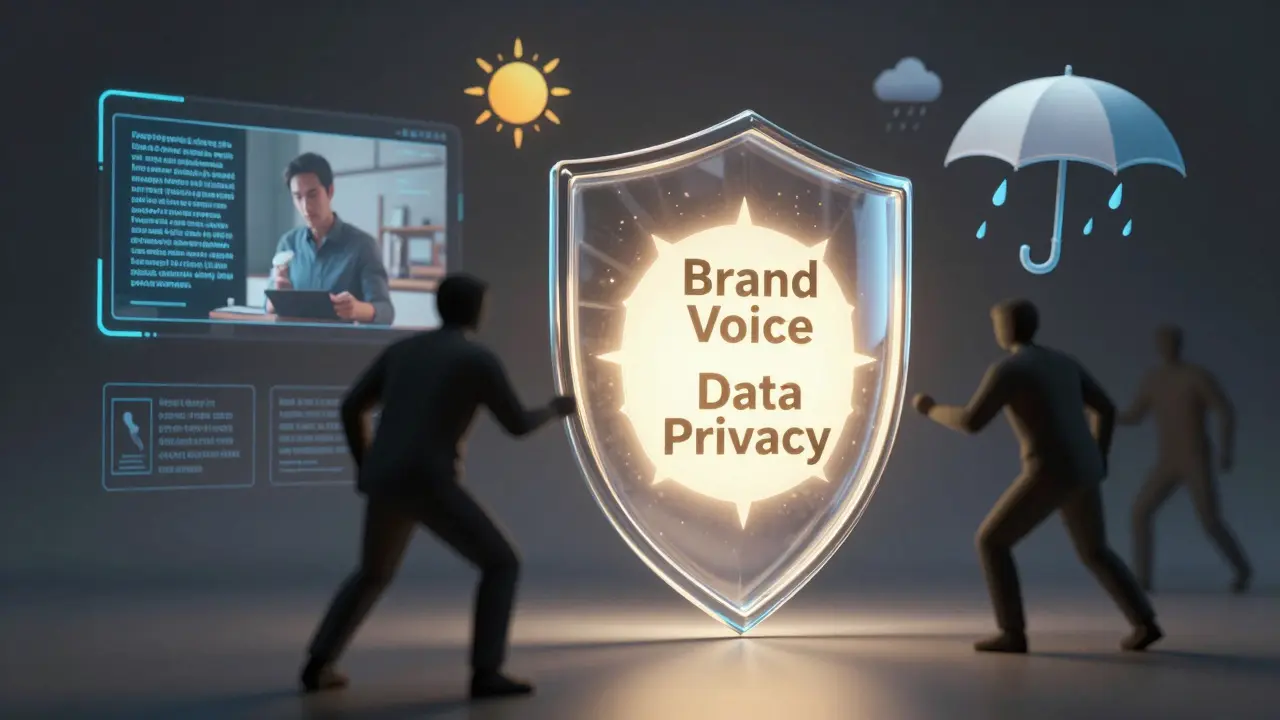
Brand Safety: ChatGPT can occasionally produce biased or inappropriate content if the prompt is ambiguous. Always review outputs before publishing. Set up guardrails in your prompts, such as "Ensure inclusive language and avoid stereotypes."
Transparency: Regulations are tightening around AI-generated content. In some regions, you may be required to disclose if content was created by AI. Check local laws like the EU AI Act or FTC guidelines. Being transparent builds trust with your audience.
Data Privacy: Never feed sensitive customer data (like names, emails, or credit card numbers) into public AI models. Use anonymized aggregates or enterprise-grade solutions with data protection guarantees. Leaking PII (Personally Identifiable Information) can lead to severe legal penalties.
Homogenization: If everyone uses the same AI tools with similar prompts, all ads start sounding the same. Differentiate your brand by injecting unique insights, proprietary data, and distinct voice guidelines into your prompts. Your brand personality should be the filter, not the AI.
Future Trends: What’s Next for AI Advertising?
We are only scratching the surface. By late 2026 and into 2027, expect several developments:
- Multimodal Generation: ChatGPT and similar models will seamlessly generate images, video scripts, and audio alongside text. Imagine generating a full TV commercial storyboard from a single text prompt.
- Real-Time Adaptation: Ads will adjust live based on current events, weather, or stock prices. If it rains in Boston, your umbrella ad updates instantly with local imagery and copy.
- Predictive Creative: AI will analyze past performance data to predict which creative elements will work before you even launch them. This reduces wasted ad spend significantly.
Marketers who adapt now will have a massive advantage. Those who wait until these features are mainstream will struggle to catch up. Start experimenting with basic text generation today to build the skills needed for tomorrow’s multimodal tools.
Getting Started: A Simple Action Plan
Don’t try to boil the ocean. Start small. Pick one repetitive task in your workflow-maybe writing subject lines for newsletters or drafting social media captions-and automate it with ChatGPT. Measure the results. Compare engagement rates against your previous manual efforts. Iterate on your prompts. Once you see success, expand to more complex tasks like landing page copy or email sequences.
Invest time in learning prompt engineering. It’s a skill that pays dividends. Join communities, read case studies, and share what works with your team. The goal isn’t to let AI do the thinking; it’s to let AI do the heavy lifting so you can focus on strategy, creativity, and connection.
Is ChatGPT free for commercial advertising use?
OpenAI offers both free and paid tiers. For commercial use, especially involving sensitive data or high-volume generation, a paid plan like Plus or Pro is recommended. Always check the latest terms of service regarding ownership of generated content. Generally, users own the output, but enterprise plans offer additional legal protections and data privacy assurances.
Will Google Ads detect if my ad copy is written by AI?
Google does not explicitly ban AI-generated copy. However, their algorithms prioritize user experience and relevance. If AI-generated ads are low-quality, repetitive, or misleading, they will perform poorly and may be flagged for policy violations. Focus on creating valuable, original-sounding content regardless of the tool used. Disclosure requirements may vary by region, so stay updated on regulatory changes.
How do I ensure my brand voice remains consistent with AI?
Create a detailed brand voice guide and include it in your system prompts. Specify tone, vocabulary preferences, forbidden phrases, and examples of good vs. bad copy. Train the AI by providing few-shot examples-give it three samples of your best work and ask it to mimic that style. Regularly audit outputs to ensure alignment.
Can ChatGPT help with video ad scripts?
Yes, absolutely. You can prompt ChatGPT to write structured video scripts including scene descriptions, dialogue, visual cues, and timing estimates. Specify the platform (e.g., YouTube pre-roll, TikTok vertical video) to get appropriate pacing and format. While it won’t edit the video itself, it provides the blueprint for production.
What are the biggest mistakes beginners make with AI ads?
The most common mistake is copying and pasting AI output without editing. This leads to generic, robotic-sounding ads that fail to convert. Another error is ignoring data privacy rules by inputting customer information. Finally, many users lack clear prompts, resulting in irrelevant suggestions. Treat AI as a first-draft generator, not a final publisher.