
Innovative SEO Approaches: How ChatGPT Is Changing Search Engine Optimization
For years, SEO was all about keyword stuffing, backlink farms, and rigid templates. But if you’re still writing meta descriptions by hand or guessing which topics your audience cares about, you’re already behind. ChatGPT isn’t just another tool-it’s reshaping how SEO works from the inside out. It’s not replacing SEO experts. It’s making them faster, smarter, and more strategic.
ChatGPT Turns Keyword Research From Guesswork Into Science
Traditional keyword research used to mean spending hours in tools like Ahrefs or SEMrush, sifting through volumes of data, and still missing the real questions people ask. With ChatGPT, you can type in a broad topic-like ‘best running shoes for flat feet’-and get back a list of 20 long-tail variations that real people actually search for. Not just the obvious ones. The ones buried in forum threads, Reddit posts, and customer service chats.
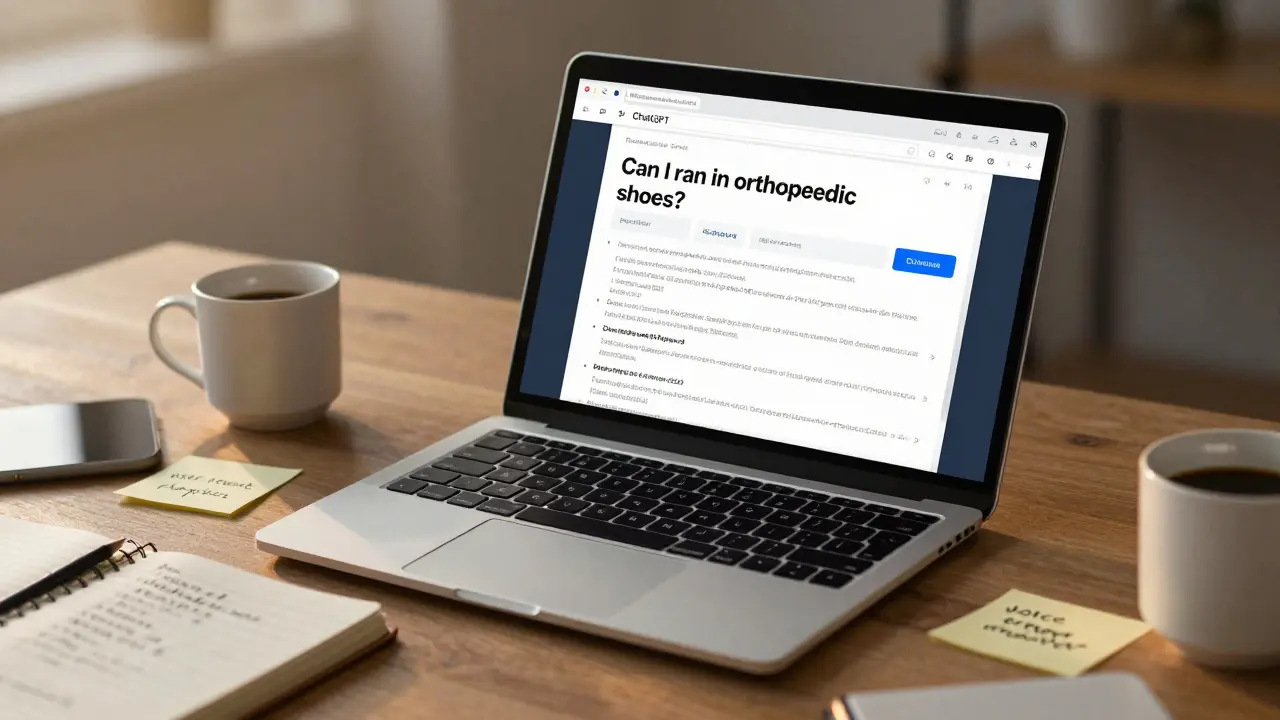
Try this: Ask ChatGPT, ‘What are five questions people with plantar fasciitis ask about running shoes?’ It doesn’t pull from a database. It synthesizes patterns from millions of conversations. You get answers like, ‘Can I run in orthopedic shoes?’ or ‘Do cushioned shoes make plantar fasciitis worse?’ These aren’t keywords you’d find in a tool’s keyword planner. They’re the actual language your audience uses. And that’s the gold.
Writing Content That Ranks Without Sounding Like a Robot
Many people think ChatGPT writes robotic content. That’s only true if you tell it to. The real trick is using it as a co-writer, not a ghostwriter. Start by giving it a rough outline: ‘Write a 1,200-word guide on how to fix slow website loading times for small business owners.’ Then ask it to rewrite one section in the voice of a local plumber who’s been fixing websites on weekends for ten years.
ChatGPT can mimic tone. It can adjust formality, add humor, or sound like a tired parent explaining tech to their kid. You take the draft, add your own stories, real data from your site analytics, and a few personal insights. The result? Content that feels human, answers real questions, and ranks because it actually helps people-not because it’s stuffed with keywords.
Automating Technical SEO Without Coding
Technical SEO used to require developers. If your site had broken internal links, duplicate meta tags, or poor schema markup, you had to wait for your dev team. Now, you can paste a page URL into ChatGPT and ask: ‘What are the top three technical SEO issues on this page?’ It scans the text, identifies missing alt tags, flags thin content, and suggests schema types that fit your topic-even if you’ve never heard of JSON-LD before.
One e-commerce store in Melbourne used this method to fix 87 broken internal links in two days. They didn’t hire a developer. They just fed ChatGPT their top 20 product pages and asked it to compare each one to the homepage’s link structure. The tool spotted patterns: every product page was linking to the ‘About Us’ page instead of related products. They fixed it. Organic traffic jumped 22% in three weeks.

Scaling Content Without Sacrificing Quality
Most businesses think they need to publish 10 blog posts a week to rank. That’s not true anymore. What matters is depth, relevance, and user intent. ChatGPT helps you turn one high-performing piece into five more-without copying it.
Take a popular guide on ‘how to start a podcast.’ Instead of writing another one, ask ChatGPT: ‘What are five related subtopics that people search for after reading this?’ It might suggest: ‘best mic under $100 for beginners,’ ‘how to edit podcast audio for free,’ or ‘where to host a podcast without a website.’ You now have five new content ideas that naturally connect to your original piece. You’re not creating silos-you’re building a content cluster.
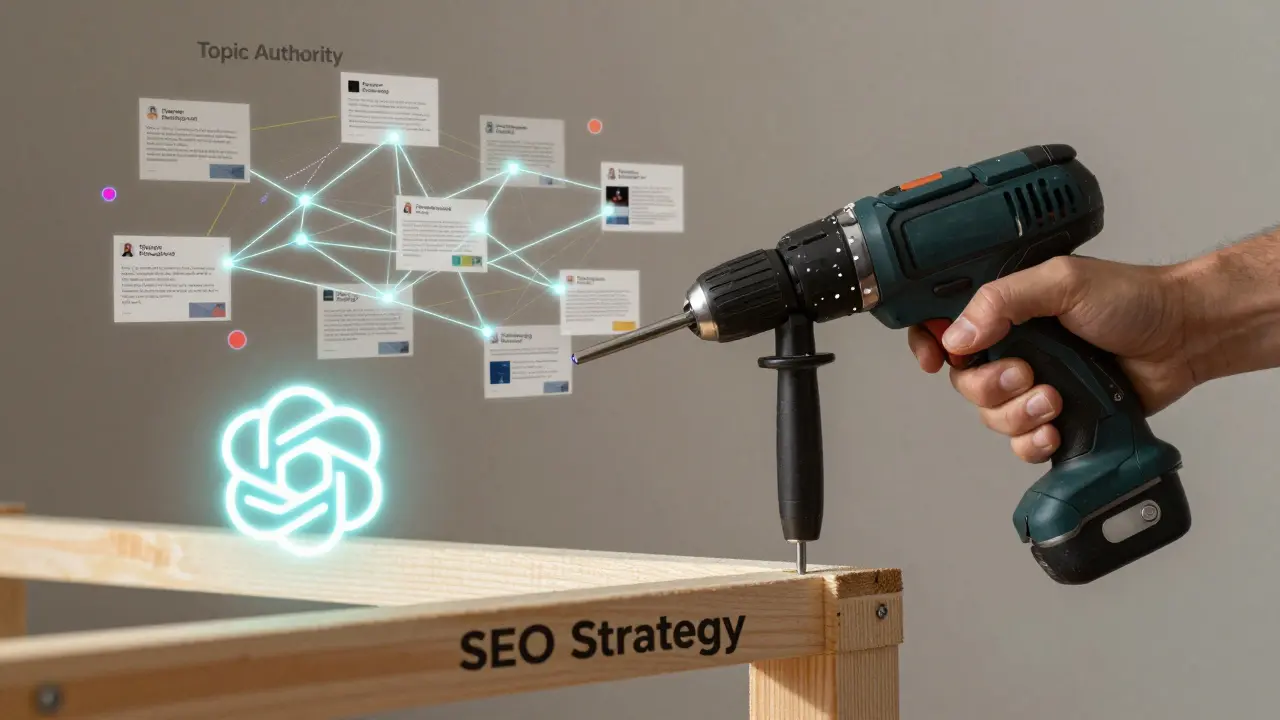
And here’s the kicker: Google rewards topic clusters. When your pages link to each other and cover a subject from every angle, Google sees you as an authority. ChatGPT helps you build those connections fast.
Understanding User Intent Like a Human
Google doesn’t care if you use the word ‘best’ 15 times in a title. It cares if your page answers the question behind the search. ChatGPT can analyze search intent in seconds.
Ask it: ‘What does someone really want when they search for “how to get more Instagram followers”?’ It won’t say ‘tips and tricks.’ It’ll say: ‘They want to grow without buying fake followers. They’re scared of scams. They need a step-by-step plan that doesn’t take 20 hours a week.’ That’s the insight you need to write a page that actually converts.
One digital marketer in Sydney used this to rewrite a blog post on ‘email list building.’ Instead of listing 10 tools, she wrote: ‘Here’s how I grew my list from 0 to 12,000 in 6 months-without ads, without giveaways, and without lying to people.’ The bounce rate dropped 40%. Time on page went up 78%. Why? Because ChatGPT helped her see the emotion behind the search.
Testing Headlines That Actually Get Clicks
Your headline is your first and last chance to get someone to click. Most people write headlines based on gut feeling. ChatGPT lets you test dozens in seconds.
Try this: Write five different headlines for your article. Paste them into ChatGPT and ask: ‘Which of these headlines would a 35-year-old small business owner click on first, and why?’ It doesn’t just pick one. It explains why. ‘Headline #3 works because it uses “real results” instead of “boost your traffic”-that phrase signals proof, not hype.’
One SEO agency in Brisbane tested 12 headline variations using this method. The top performer got 3.7x more clicks than their old headline. And it wasn’t the most clever one. It was the most honest.
What ChatGPT Can’t Do (And What You Still Need)
ChatGPT isn’t magic. It can’t replace your experience. It won’t know your brand voice unless you teach it. It can’t fix a website that loads in 8 seconds. It can’t replace real user testing or data from Google Analytics.
Think of it like a power drill. It doesn’t build the house. But it drives the nails faster, straighter, and with less effort. You still need to know where to put the nails.
Use ChatGPT for ideation, drafting, and scaling. Use your brain for strategy, editing, and adding real-world context. The best SEO teams today aren’t using AI to cut corners. They’re using it to focus on what matters: understanding people.
Getting Started With ChatGPT for SEO (Simple Steps)
- Start with one piece of content you want to improve-maybe your top-performing blog post.
- Ask ChatGPT: ‘What are five related questions people ask after reading this?’
- Use those questions to create new content or update existing pages.
- Paste a meta description into ChatGPT and ask: ‘Is this clear, compelling, and aligned with search intent?’
- Run a technical audit: copy a page’s text and ask: ‘What SEO issues do you see here?’
- Test three headline variations. Pick the one ChatGPT says has the highest click-through potential.
You don’t need to do all of this at once. Start with one step. Do it well. Then add another.
Can ChatGPT replace SEO professionals?
No. ChatGPT is a tool, not a strategist. It can draft content, suggest keywords, and flag technical issues-but it can’t understand your brand’s voice, your audience’s emotions, or your business goals. The best SEO professionals use ChatGPT to work faster, not to replace their judgment.
Is content written by ChatGPT penalized by Google?
Google doesn’t penalize content based on who wrote it. It penalizes low-quality, misleading, or spammy content-no matter if it’s written by a human or AI. If you use ChatGPT to generate thin, repetitive, or irrelevant text, Google will notice. But if you use it to create helpful, detailed, and original content that answers real questions, it will rank just like any other high-quality page.
Do I need to pay for ChatGPT to use it for SEO?
You can start with the free version of ChatGPT for basic SEO tasks like brainstorming keywords or rewriting headlines. But the paid version (ChatGPT Plus) is worth it if you’re serious. It’s faster, handles longer inputs, and gives you access to GPT-4, which is significantly better at understanding context and generating accurate, nuanced content. For SEO professionals, the $20/month cost pays for itself in saved time.
How accurate is ChatGPT for technical SEO advice?
ChatGPT is good at spotting common issues like missing alt tags, duplicate titles, or thin content. But it doesn’t know your website’s backend. It can’t check server response codes or crawl your site. Always verify its suggestions with tools like Screaming Frog or Google Search Console. Use it as a first-pass audit-not a final diagnosis.
Can ChatGPT help with local SEO?
Yes. Ask it to generate location-specific content: ‘Write a service page for a plumber in Canberra who fixes leaky pipes in old brick homes.’ It can suggest neighborhood names, common problems in that area, and even local landmarks to mention. You still need to add real customer stories and service details, but ChatGPT gives you a strong, relevant starting point.
If you’re still doing SEO the way you did five years ago, you’re not falling behind-you’re being left behind. ChatGPT isn’t the future of SEO. It’s the present. The question isn’t whether you should use it. It’s how quickly you can learn to use it well.