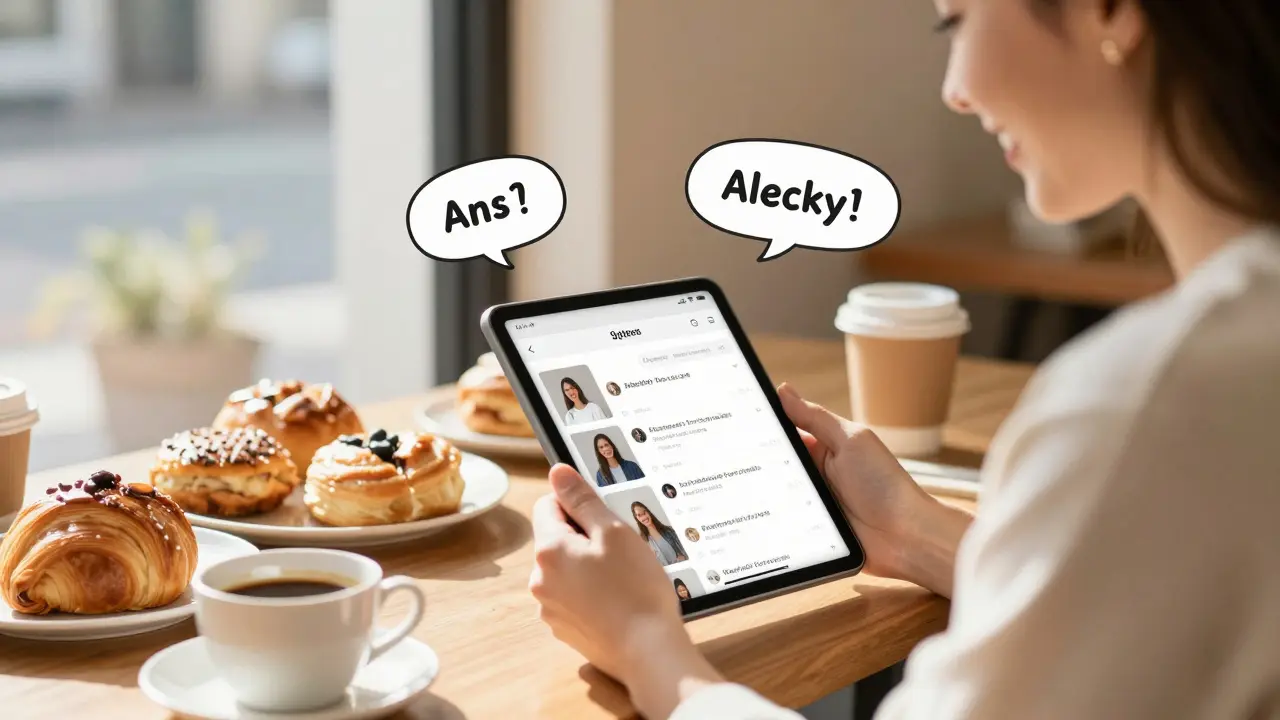
How ChatGPT Is Rewriting the Rules of Social Media in 2026

Social media has always been about connection, but lately, it feels like we are connecting with machines more than people. You scroll through your feed, and half the posts seem polished to an unnatural degree. The captions are witty without effort. The customer service replies are instant and eerily helpful. This isn't just a coincidence; it is the result of ChatGPT embedding itself into the infrastructure of platforms like Instagram, TikTok, and LinkedIn. We are no longer just watching how AI changes technology; we are living inside the change.
The shift happened faster than most predicted. What started as a novelty for writing emails has become the engine driving content strategy, community management, and even personal branding. If you are trying to keep up with social media trends in 2026, understanding this transformation is not optional-it is survival. Let’s look at exactly how large language models are reshaping the digital landscape, from the brands that use them to the everyday users who might not even realize they are interacting with one.
The Death of the Blank Page: Content Creation on Autopilot
The biggest hurdle in social media has always been consistency. Posting daily requires ideas, time, and energy-resources that run out quickly. ChatGPT solved this by removing the friction of starting. For marketers and creators, the tool acts as an infinite brainstorming partner. Instead of staring at a blinking cursor, you can ask for ten variations of a hook for a new product launch in seconds.
This speed has changed the volume of content online. Brands that once posted three times a week now post multiple times a day because the cost of production has dropped near zero. But there is a catch. When everyone uses the same tools, everything starts to sound the same. You have probably noticed this yourself. Those generic "5 ways to boost your productivity" articles or the overly enthusiastic captions thanking followers for their support often carry a distinct, flat tone. It is the "AI voice." Smart creators know they must add human nuance-personal stories, specific data points, or controversial opinions-to stand out against the sea of machine-generated mediocrity.
Consider a small bakery in Wellington. In the past, the owner might struggle to write engaging posts about sourdough. Now, they feed ChatGPT a list of ingredients and baking tips, and get a week’s worth of engaging captions. The efficiency is undeniable, but the challenge shifts from creation to curation. The value is no longer in writing the text; it is in selecting the best output and ensuring it aligns with the brand’s unique personality.
Customer Service That Never Sleeps
Beyond content, the real revolution is happening in the comments section and direct messages. Customer expectations have skyrocketed. People want answers instantly, whether it is 2 PM or 2 AM. Traditional chatbots were frustrating because they relied on rigid scripts. If you didn’t type the exact keyword, they failed. ChatGPT-based agents are different. They understand context, slang, and intent.
Imagine you message a clothing retailer about a return policy. An old bot would say, "I did not understand that." A modern AI agent powered by advanced language models will read your message, recognize you are upset, check your order history, and offer a prepaid label while apologizing for the delay. This level of interaction builds trust, but it also raises privacy concerns. Users are increasingly wary of sharing personal details with automated systems, even if those systems promise better service.
For businesses, this means a hybrid approach is becoming the standard. AI handles the first layer of support-answering FAQs, tracking orders, and scheduling appointments. Human agents step in only when the conversation gets complex or emotional. This reduces operational costs significantly, allowing companies to scale their support teams without hiring hundreds of new staff. However, it requires careful tuning. If the AI gives wrong advice, the backlash can be severe. Companies must invest heavily in training data and safety filters to prevent hallucinations-where the AI confidently states false information.
The Algorithmic Feedback Loop
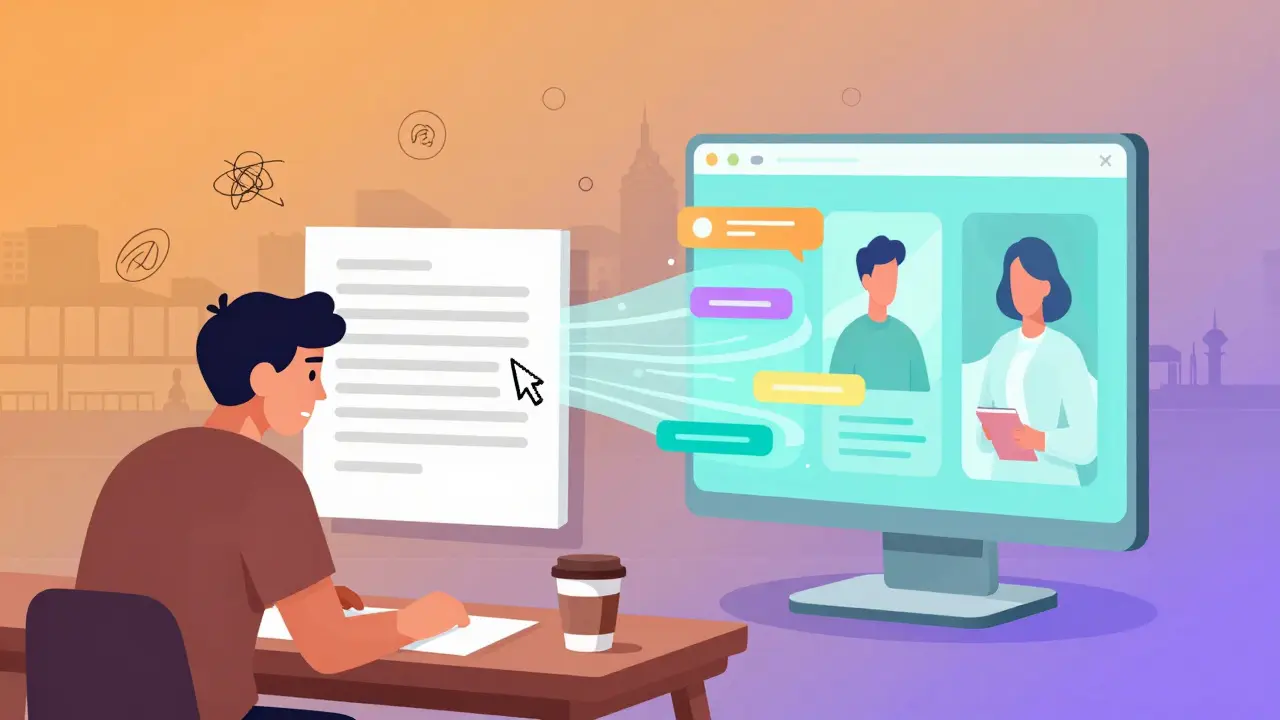
Social media algorithms prioritize engagement. They show users what keeps them scrolling. Historically, this meant controversial news or funny cat videos. Now, algorithms are learning to detect and promote AI-optimized content. Posts written by ChatGPT often follow proven structural patterns: clear headings, bullet points, and emotionally resonant conclusions. These structures tend to perform well, so the algorithm rewards them.
This creates a feedback loop. Creators use AI to write high-performing posts. The algorithm boosts these posts. Other creators see the success and adopt similar AI strategies. Eventually, the entire feed becomes saturated with optimized content. The risk here is homogenization. If every post follows the same mathematical formula for engagement, social media loses its spontaneity and diversity. Platforms like TikTok and Instagram are already experimenting with detection tools to label AI-generated content, aiming to preserve transparency for users.
However, detection is an arms race. As detectors get better, generators get smarter. By 2026, distinguishing between human-written and AI-assisted text is nearly impossible for the average user. This forces platforms to rethink their metrics. Engagement is no longer the only goal; authenticity is gaining weight. We may see a rise in "verified human" badges or features that highlight raw, unedited content over polished, AI-generated perfection.
Influencer Marketing and the Synthetic Persona
Perhaps the most unsettling development is the rise of virtual influencers. These are characters designed entirely by AI, managed by teams using tools like ChatGPT to generate their personalities and responses. They do not age, they do not have scandals, and they never miss a posting schedule. Brands love them because they are controllable assets.
But does the audience care? Surprisingly, yes. Virtual influencers have millions of followers who engage with their content. Yet, there is a growing segment of users who crave genuine human connection. They follow real people because they want to see failures, struggles, and unfiltered moments. This has created a bifurcation in the influencer market. On one side, you have the polished, perfect virtual beings promoting luxury goods. On the other, you have the "anti-influencers" who share mundane, authentic slices of life. Both succeed, but they appeal to different psychological needs.
For marketers, this means targeting must be more precise. You cannot treat all audiences the same. Some respond to the aspiration offered by synthetic personas. Others respond to the relatability of flawed humans. Understanding which demographic values which type of authenticity is crucial for campaign success. The era of one-size-fits-all influencer partnerships is over.
| Feature | Traditional Human Approach | ChatGPT-Assisted Approach |
|---|---|---|
| Content Volume | Limited by time and energy | Near-unlimited scalability |
| Tone Consistency | Varies based on mood/day | Highly consistent and brand-aligned |
| Personalization | Deep, nuanced, empathetic | Surface-level, data-driven |
| Error Rate | Low for factual knowledge | Risk of hallucinations/fabrication |
| Audience Trust | High (if authentic) | Mixed (depends on disclosure) |
Ethical Landmines and Privacy Concerns
With great power comes great responsibility, and the integration of ChatGPT into social media brings significant ethical challenges. Deepfakes and misinformation are the obvious dangers, but the subtler issue is manipulation. AI can analyze a user’s psychological profile and craft messages specifically designed to trigger emotional responses. Imagine a political ad or a sales pitch tailored perfectly to your insecurities, generated in real-time. This level of persuasion blurs the line between influence and coercion.
Regulators are catching up. The European Union’s AI Act and similar legislation in other regions require transparency. Platforms must disclose when content is AI-generated. But enforcement is difficult. How do you prove a caption was written by a machine? Watermarking text is technically challenging and easily removed. Until robust technical solutions exist, the burden falls on user education. People need to learn critical thinking skills to identify potential bias or fabrication in the content they consume.
Data privacy is another major concern. To provide personalized experiences, AI models need vast amounts of data. Are social media platforms feeding private messages into these models to train them? Most terms of service allow this, but users rarely read them. This lack of consent fuels distrust. Moving forward, companies that prioritize data sovereignty and offer opt-out options for AI training will likely gain a competitive advantage in consumer loyalty.
Future Outlook: Coexistence, Not Replacement
Will ChatGPT replace human creativity on social media? Unlikely. Instead, it will amplify it. The most successful creators and brands in the coming years will be those who view AI as a collaborator rather than a replacement. They will use it to handle the mundane tasks-drafting, editing, scheduling-freeing up human energy for strategic thinking, emotional connection, and innovative storytelling.
We are entering an era of augmented intelligence. The barrier to entry for creating professional-looking content is lower than ever. This democratization allows smaller voices to compete with larger corporations. However, it also raises the bar for quality. Since anyone can generate good text, the differentiator becomes insight, perspective, and genuine human experience. The future of social media belongs to those who can blend the efficiency of AI with the irreplaceable warmth of humanity.
Is it illegal to use ChatGPT for social media posts?
No, it is not illegal. However, many platforms require you to disclose if content is AI-generated. Failing to disclose may violate platform policies regarding transparency and authenticity, potentially leading to reduced reach or account penalties.
Can social media algorithms detect AI-written content?
Algorithms are getting better at detecting patterns associated with AI generation, such as repetitive sentence structures or lack of emotional variance. While they may not flag every instance, consistently low-quality AI content may receive less promotion compared to engaging, human-centric posts.
Does using ChatGPT hurt my brand's credibility?
It depends on execution. If your AI content sounds robotic or contains errors, it can damage credibility. However, if used as a drafting tool and refined with human insight, it can enhance efficiency without sacrificing quality. Transparency about using AI can actually build trust with tech-savvy audiences.
How can I make AI-generated content sound more human?
Add personal anecdotes, specific data points, and varied sentence lengths. Avoid generic phrases and overly formal language. Inject humor, sarcasm, or vulnerability where appropriate. Always review and edit the output to ensure it aligns with your unique brand voice.
Will AI replace social media managers?
AI will automate many tasks performed by social media managers, such as scheduling and basic copywriting. However, strategic planning, crisis management, creative direction, and building genuine community connections still require human intuition and empathy. The role will evolve rather than disappear.