How ChatGPT is Rewriting the Rules of Modern Advertising

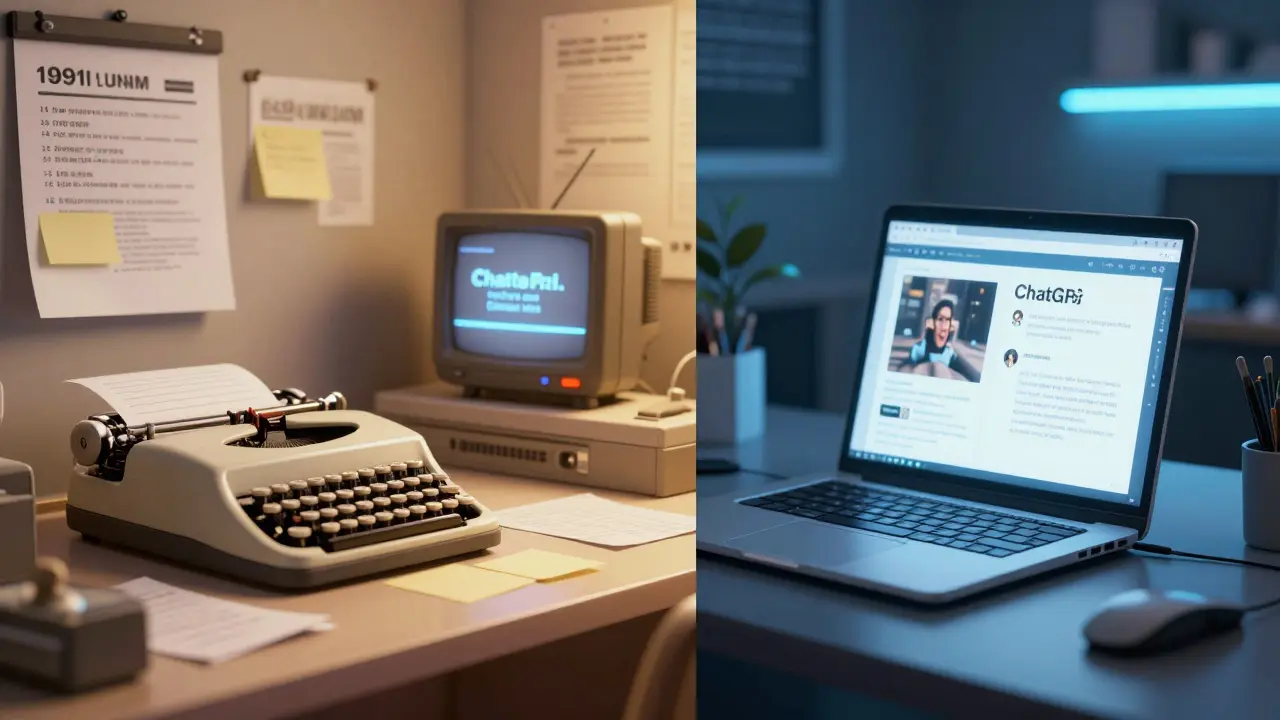
Remember when writing a single email campaign took your team three days? You’d brainstorm, draft, edit, get legal approval, and then pray it didn’t sound like robot-speak. That era is gone. ChatGPT is a large language model developed by OpenAI that generates human-like text based on prompts. It has moved from being a novelty to the engine room of modern advertising. In 2026, brands aren’t just using it to write blog posts; they are using it to run entire ad ecosystems in real-time.
The shift isn't just about speed. It’s about scale and personalization at a level that was mathematically impossible five years ago. We are no longer asking "Can AI write an ad?" The question is now "How do we control the thousands of variations AI creates without losing our brand voice?" This changes everything for marketers, from the small business owner to the CMO of a Fortune 500 company.
The End of One-Size-Fits-All Copy
Traditional advertising relied on broad demographics. You targeted "women aged 25-40 who like yoga." ChatGPT allows for micro-segmentation driven by intent and context. Instead of one headline for everyone, you can generate hundreds of unique hooks tailored to specific user behaviors.
Imagine a travel agency running Facebook ads. In the past, they might have had three versions of an ad: one for beaches, one for mountains, and one for cities. With Generative AI is a type of artificial intelligence capable of creating new content, including text, images, and code, they can now serve an ad that says, "Escape the Wellington rain this weekend with a sunny hike in the Tararua Ranges," to someone who just searched for "rainy weather activities NZ." The copy is dynamic, relevant, and hyper-local.
- Dynamic Headlines: Generate 100 headlines based on trending keywords in real-time.
- Tone Adjustment: Switch from playful to professional depending on the platform (TikTok vs. LinkedIn).
- Language Localization: Translate and culturally adapt copy for global campaigns instantly.
This isn't just translation. It's transcreation. ChatGPT understands idioms, humor, and cultural nuances better than most human translators working under tight deadlines. For a global brand, this means consistent messaging without the stiff, awkward phrasing that often plagues translated ads.
Speed vs. Strategy: The New Workflow
The biggest misconception about AI in advertising is that it replaces the strategist. It doesn't. It replaces the grunt work. The bottleneck in advertising used to be production-getting the words on the page. Now, the bottleneck is strategy-deciding what message resonates best.
Consider the workflow of a digital marketer in 2026. They don't sit down to write. They sit down to curate. A marketer inputs a brief into ChatGPT: "Write 10 Instagram captions for a sustainable coffee brand targeting Gen Z, focusing on ethical sourcing and aesthetic packaging." Within seconds, they have options. They pick the best two, tweak them slightly, and send them for approval. What took four hours now takes twenty minutes.
This speed forces a change in how we measure success. Because you can test so many variables, statistical significance comes faster. You don't need to wait a month to see if a headline works. You know within 24 hours. This rapid feedback loop allows advertisers to pivot campaigns on the fly, reducing wasted ad spend significantly.
The Risk of Homogenization
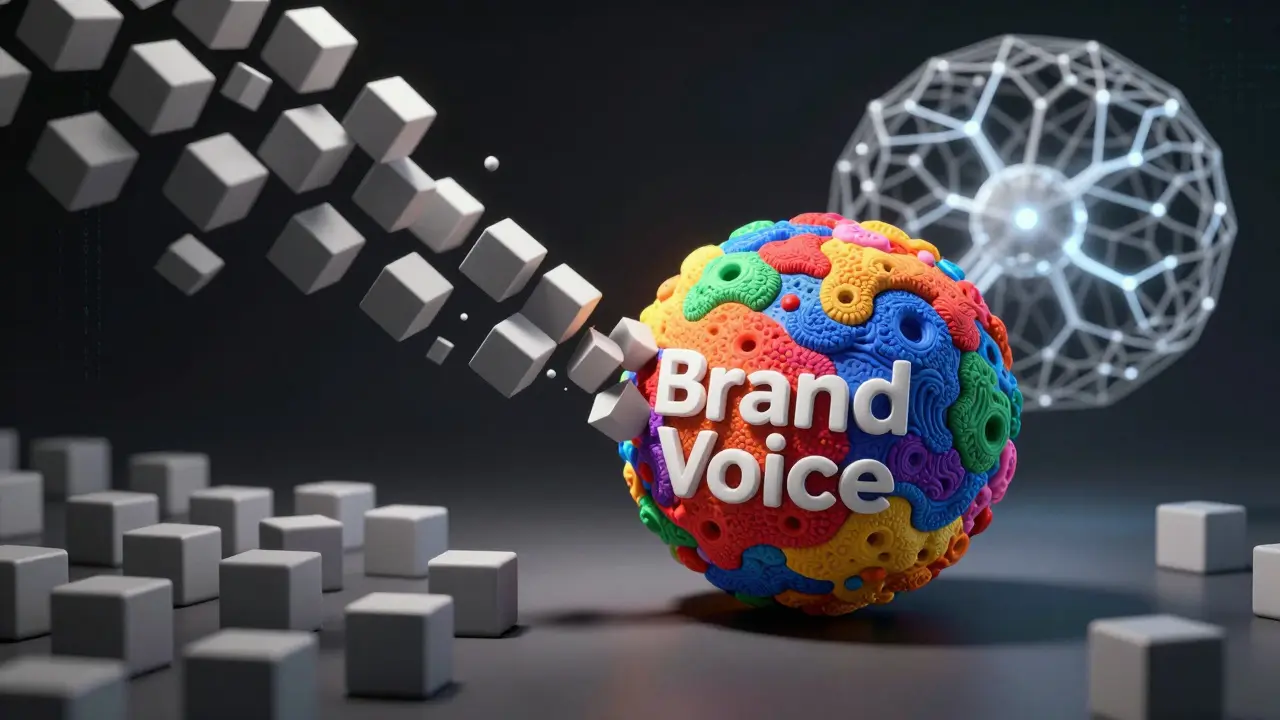
Here is the dark side of the coin. If everyone uses the same tool with similar prompts, does all advertising start to sound the same? There is a genuine risk of Brand Homogenization is the phenomenon where distinct brands begin to look, sound, and feel identical due to shared tools or trends. Early experiments with LLMs showed that models tend to converge toward a safe, neutral tone. They avoid controversy, which is great for legal teams but terrible for memorable branding.
If your brand is edgy, bold, or quirky, raw ChatGPT output will likely dilute that personality. It plays it safe. To combat this, successful brands are building custom "brand voices" within their AI workflows. This involves feeding the model extensive examples of past successful campaigns, style guides, and even failed attempts to teach it what *not* to say.
You have to train the AI to be less polite and more authentic. You prompt it not just for "copy," but for "copy that sounds like our founder wrote it after a double espresso." Without this deliberate effort, your ads will blend into the background noise of millions of other AI-generated messages.
Integration with Programmatic Advertising
ChatGPT doesn't live in a vacuum. Its true power emerges when connected to Programmatic Advertising is the automated buying and selling of online ad space using algorithms and real-time bidding. This integration creates a closed-loop system where data informs copy, and copy performance informs future data collection.
| Feature | Traditional Workflow | AI-Augmented Workflow |
|---|---|---|
| Copy Creation Time | Days to Weeks | Minutes to Hours |
| Variant Testing | 3-5 Variations | 100+ Variations |
| Personalization Level | Broad Demographics | Individual User Context |
| Human Role | Writer & Editor | Strategist & Curator |
| Error Rate | Low (but slow) | Medium (requires heavy QA) |
In this setup, if an ad variant performs poorly, the system can automatically flag it and ask ChatGPT to generate alternatives based on the winning elements of the top-performing ads. This is known as Dynamic Creative Optimization (DCO) is a technology that automates the creation and delivery of personalized ad creatives in real-time. While DCO existed before, it was limited to swapping images and static text fields. Now, it can rewrite the entire narrative arc of an ad dynamically.
Ethical Considerations and Transparency
We cannot talk about AI in advertising without addressing trust. Consumers are becoming savvy. They can often smell an AI-generated response from a mile away. Worse, regulations are catching up. In many regions, including parts of Europe and increasingly in New Zealand and Australia, there are discussions around mandatory disclosure of AI-generated content.
Using ChatGPT to fabricate testimonials or fake user reviews is not just unethical; it’s a fast track to destroying brand reputation. When caught, the backlash is severe. Brands must establish clear guardrails. AI should be used for augmentation, not deception. Always fact-check claims generated by the model. Hallucinations-where the AI confidently states false information-are still a major issue. An ad claiming a product has "clinically proven results" based on a made-up study generated by ChatGPT could lead to lawsuits.
Transparency builds loyalty. Some brands are openly stating, "This ad was co-created with AI." Surprisingly, this doesn't always hurt engagement. It shows innovation and honesty. However, the core emotional connection must still come from humans. AI can write the script, but it can't feel the pain point it's addressing.

The Future: From Text to Multi-Modal Campaigns
Text is only the beginning. The next wave involves multi-modal generation. ChatGPT and similar models are integrating with image generators like Midjourney and video tools like Sora. Soon, a marketer won't just prompt for copy; they will prompt for a complete campaign asset package.
Imagine typing: "Create a 15-second video ad for our new hiking boots, featuring a muddy trail in the Southern Alps, with a voiceover emphasizing durability." The AI generates the script, the storyboard, the visuals, and the voiceover. This democratizes high-end production. Small businesses can compete with big budgets because the cost of creation has plummeted.
However, this raises the bar for creativity. If anyone can produce a polished ad, what makes yours stand out? The answer lies in insight. AI can execute, but it cannot yet understand deep human culture, current events, or subtle social shifts. The marketers who win in 2026 and beyond are those who combine AI efficiency with deep human empathy and cultural awareness.
Practical Steps to Implement AI in Your Ads
If you are ready to move beyond theory, here is how to start without breaking your brand.
- Audit Your Current Copy: Identify your best-performing ads from the last year. Analyze why they worked. Was it the hook? The offer? The tone?
- Create a Style Guide Prompt: Build a master prompt that defines your brand voice. Include examples of "good" and "bad" copy. Feed this to your AI model every time you start a new task.
- Start Small: Don't automate your entire funnel. Start with social media captions or email subject lines. Test against human-written controls.
- Implement Human-in-the-Loop: Never publish raw AI output. Assign a human editor to review for tone, accuracy, and brand alignment.
- Monitor Performance: Track metrics closely. Look for drops in engagement that might indicate "AI fatigue" among your audience.
The goal is not to replace your creative team. It is to free them from the mundane tasks so they can focus on big-picture strategy and innovative ideas. Use ChatGPT as a junior intern who works incredibly fast but needs close supervision. Treat it with respect, but never with blind trust.
Does ChatGPT replace copywriters in advertising?
No, it augments them. ChatGPT handles volume and variation, allowing copywriters to focus on strategy, brand voice, and high-level creative direction. The role shifts from writer to editor and strategist.
Is it legal to use AI-generated ads?
Yes, generally, but regulations are evolving. You must ensure the content does not infringe on copyright, make false claims, or violate local advertising standards. Always fact-check AI outputs for hallucinations.
How do I prevent my ads from sounding robotic?
Use detailed prompts that specify tone, audience, and brand personality. Provide examples of your best human-written copy as reference. Always have a human edit the final output to add nuance and authenticity.
What are the biggest risks of using ChatGPT for ads?
The main risks include brand homogenization (all ads sounding the same), factual errors (hallucinations), and loss of emotional connection. Over-reliance on AI can also stifle creativity and lead to generic messaging.
Can ChatGPT optimize ad spend directly?
Not directly. ChatGPT generates creative assets. However, by enabling rapid A/B testing and Dynamic Creative Optimization, it helps identify high-performing variants faster, indirectly improving ROI and reducing wasted spend.