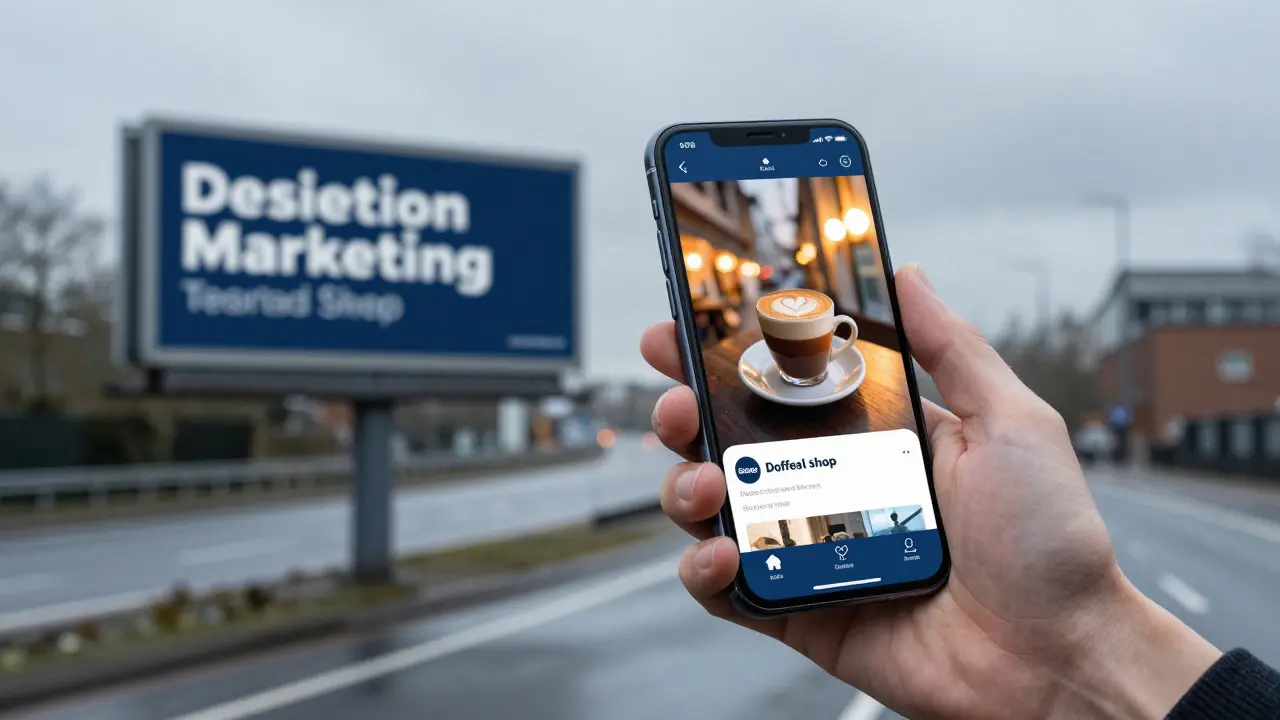
From Novice to Expert: Your Digital Marketing Journey

Think back to the last time you clicked a link in an Instagram story or bought something after seeing a targeted ad. Did you realize that behind that single click was a complex web of data, psychology, and technology? Most people think Digital Marketing is just about posting pretty pictures on social media. It’s not. It’s the art of connecting with the right person, at the right time, through the right channel. If you’re standing at the starting line, feeling overwhelmed by acronyms like CTR, CPC, and ROAS, take a breath. You don’t need to know everything today. You just need a map.
This journey isn’t about memorizing textbook definitions. It’s about understanding how digital channels work together to drive real business results. Whether you want to land your first job, launch a side hustle, or scale your existing business, moving from novice to expert requires a shift in mindset. You stop thinking about "likes" and start thinking about "leads." Here is how you actually get there, step by messy step.
The Foundation: Understanding the Ecosystem
Before you touch a keyboard to write a blog post or set up a Facebook ad, you need to grasp the landscape. Digital Marketing is an umbrella term covering all online efforts to reach customers. Unlike traditional marketing, which blasts messages to everyone, digital allows for precision targeting. You can show a shoe ad only to people who looked at running shoes yesterday. That specificity changes everything.
As a beginner, your biggest enemy is shiny object syndrome. Every week, some guru claims TikTok is dead and AI will replace copywriters. Ignore the noise. Focus on the core pillars that have remained stable for years:
- Search Engine Optimization (SEO): Getting found when people search for solutions.
- Content Marketing: Providing value to build trust before asking for the sale.
- Social Media Marketing: Building community and brand awareness.
- Email Marketing: Owning your audience and driving repeat purchases.
- Paid Advertising (PPC): Buying immediate traffic while organic strategies mature.
You don’t need to master all five immediately. Pick one. Master it. Then move to the next. Trying to do everything at once usually leads to burnout and mediocre results across the board.
Phase One: The Novice - Learning to Listen
Most beginners jump straight into creating content. They write blogs, post reels, and run ads without knowing who they are talking to. This is backwards. The first skill you must develop is listening. Who is your customer? What keeps them up at night?
Start with Customer Personas. These aren't just demographic stats like "male, 30-40." They are psychological profiles. For example, instead of saying "small business owners," say "Sarah, a 35-year-old bakery owner who feels overwhelmed by bookkeeping and wants simple software that doesn't require a tutorial." When you define your persona this way, your marketing becomes obvious. You speak their language.
Your tools during this phase should be free and accessible. Use Google Trends to see what people are searching for. Look at Reddit threads related to your niche. Read Amazon reviews for competitor products. Notice the complaints. Those complaints are your content ideas. If users hate that a product has bad battery life, your angle is "The device that lasts all day."
Don’t worry about perfection here. Your first ten posts might be cringeworthy. That’s fine. The goal is to learn how platforms format content and how algorithms react to engagement. Post consistently. Watch the metrics. Learn what resonates.
Phase Two: The Practitioner - Building Systems
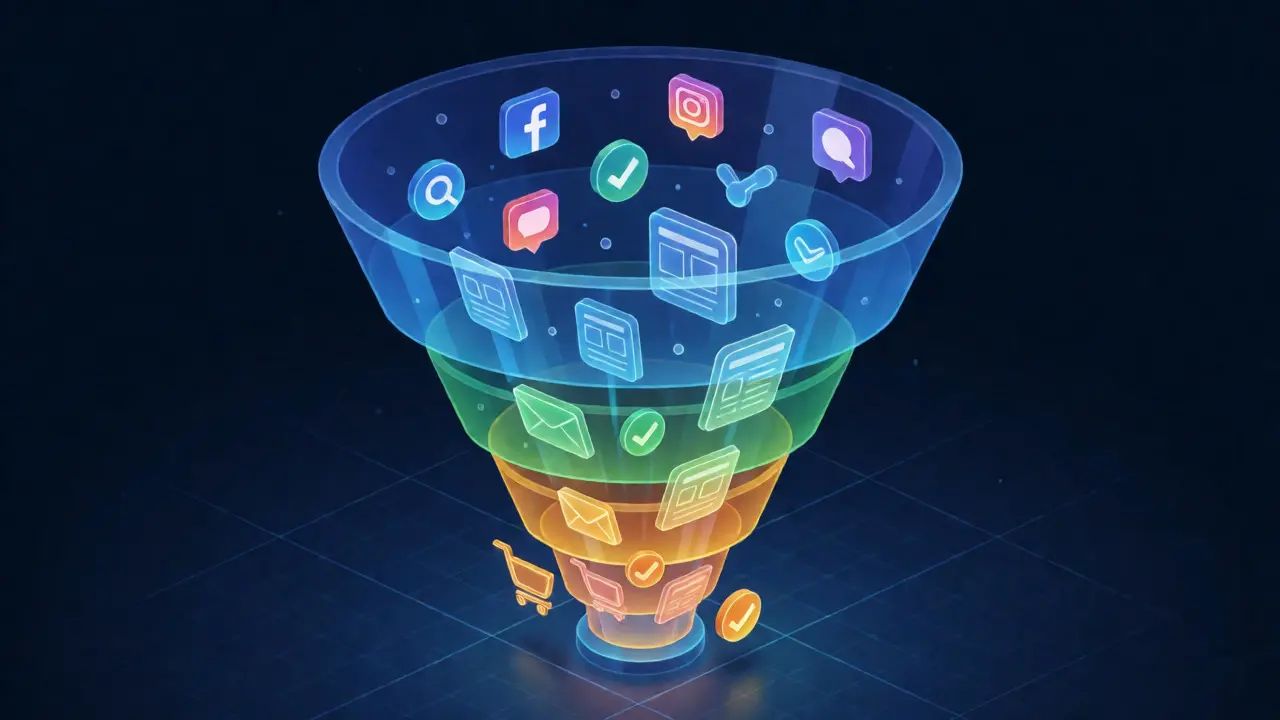
Once you understand your audience, you need systems. Random acts of kindness in marketing rarely pay off. You need a funnel. A Marketing Funnel is the journey a stranger takes to become a customer. It typically consists of three stages: Awareness, Consideration, and Conversion.
In the Awareness stage, you attract attention. This is where SEO and social media shine. You create helpful content that solves small problems. In the Consideration stage, you prove you’re credible. Case studies, webinars, and detailed comparisons live here. Finally, in the Conversion stage, you ask for the sale. Email sequences and retargeting ads often close the deal.
Let’s look at how different channels fit into this system:
| Funnel Stage | Primary Goal | Best Channels | Key Metric |
|---|---|---|---|
| Awareness | Reach new audiences | Social Media, SEO, Display Ads | Impressions, Reach |
| Consideration | Educate and engage | Blogs, Webinars, Email Newsletters | Time on Page, Click-Through Rate |
| Conversion | Drive sales/sign-ups | Landing Pages, Retargeting Ads, Direct Email | Conversion Rate, Cost Per Acquisition |
Notice that no single channel does everything. Social media is terrible at closing high-ticket B2B deals but great for introducing a brand. Email is poor for discovery but excellent for retention. As a practitioner, your job is to connect these dots. Ensure that someone who clicks a Twitter link lands on a relevant landing page, not your homepage. Friction kills conversions.
Phase Three: The Analyst - Making Data Decisions
Here is where many marketers stall. They create content and hope for the best. Experts measure. You cannot improve what you do not track. Web Analytics is the practice of collecting and analyzing data to understand user behavior. Tools like Google Analytics 4 (GA4) allow you to see exactly where visitors come from and what they do next.
You don’t need to be a data scientist. You just need to answer three questions:
- Where did they come from? Was it organic search, a paid ad, or a referral link?
- What did they do? Did they read the article? Did they add to cart? Did they bounce immediately?
- Why did they leave? Was the price too high? Was the form too long? Was the site slow?
Suppose you notice that 80% of mobile users abandon their carts on checkout. That’s a red flag. Maybe your payment button is hard to tap on small screens. Fix that one thing, and your revenue could jump 10%. That is the power of analytics. It moves you from guessing to knowing.
Be careful with vanity metrics. Likes and follower counts feel good, but they don’t pay bills. Focus on metrics tied to money: Customer Acquisition Cost (CAC) and Lifetime Value (LTV). If it costs you $50 to acquire a customer who spends $200 over two years, you’re winning. If it costs $150, you’re bleeding.
Phase Four: The Strategist - Integrating Technology
As you advance, manual tasks become bottlenecks. Sending emails one by one? Automate it. Posting to five social networks manually? Schedule it. This is where Marketing Automation enters the picture. Platforms like HubSpot, Mailchimp, or Klaviyo help you trigger actions based on user behavior.
Imagine a user downloads a free guide from your site. Instead of waiting for them to email you, your automation sends a welcome email instantly, then another tip three days later, and finally a discount offer on day seven. This nurture sequence happens while you sleep. It scales your effort without scaling your hours.
Artificial Intelligence is also reshaping this space. Tools now generate copy, segment audiences, and predict churn. But remember: AI is a tool, not a strategist. It can write a headline, but it can’t decide if that headline aligns with your brand voice or market positioning. Your human judgment remains the competitive advantage.
At this stage, you’re also looking at cross-channel integration. Your CRM (Customer Relationship Management) system should talk to your ad platform. If someone buys a product, stop showing them ads for that same product. Show them accessories or upsells instead. Seamless data flow creates a smoother customer experience.

Phase Five: The Expert - Leadership and Adaptation
Experts aren’t defined by knowing every algorithm update. They’re defined by adaptability. The digital landscape shifts constantly. Search engines change ranking factors. Privacy laws tighten. New platforms emerge overnight.
An expert builds a team or a network around themselves. You might be great at SEO but terrible at video editing. Hire a specialist. Or partner with an agency. Your role shifts from doing every task to overseeing the strategy. You allocate budget, approve creative direction, and monitor ROI.
Critical thinking becomes your sharpest tool. When a new trend appears-say, short-form video dominating feeds-an expert asks: "Does this fit our audience? Can we produce quality content sustainably? Will this cannibalize our other channels?" Don’t chase trends for the sake of novelty. Chase them for strategic advantage.
Finally, experts mentor others. Teaching forces you to clarify your own understanding. It reveals gaps in your knowledge. By sharing what you’ve learned, you solidify your status as a leader in the field.
Pitfalls to Avoid on the Road to Mastery
Even experienced marketers fall into traps. Here are the most common ones:
- Ignoring Mobile Users: Over 60% of web traffic comes from phones. If your site looks bad on mobile, you lose half your audience instantly.
- Over-Automating: Spamming subscribers with irrelevant automated emails annoys them. Keep personalization genuine.
- Chasing Virality: One viral hit doesn’t build a business. Consistent, reliable traffic does.
- Neglecting Technical SEO: Great content won’t rank if your site loads slowly or has broken links.
Stay curious. Subscribe to newsletters from sources like Search Engine Journal or HubSpot Academy. Experiment with small budgets. Fail fast, learn faster.
Do I need a degree to start in digital marketing?
No. Many successful marketers are self-taught. Certifications from Google or HubSpot are helpful for credibility, but a portfolio of real projects matters more. Show employers or clients what you have built and the results you achieved.
How much budget do I need to start testing paid ads?
You can start with as little as $5-$10 per day on platforms like Facebook or Google Ads. The key is not the total amount but the consistency. Run tests for at least a week to gather enough data before making decisions. Small budgets prevent costly mistakes while you learn.
Is SEO still worth it if AI answers queries directly?
Yes, absolutely. While AI summaries appear at the top of search results, users still click through for deeper information, products, and services. SEO ensures your brand remains visible and authoritative. Plus, AI models often cite high-ranking sites as sources, so being #1 helps you feed the machine.
What is the most important metric for a beginner?
Focus on Conversion Rate. Traffic is useless if it doesn’t turn into action. Whether that action is a sign-up, a download, or a purchase, tracking how many visitors complete the desired step tells you if your message and offer resonate.
How long does it take to see results from content marketing?
Organic growth is slow. Expect 3 to 6 months before seeing significant traffic increases from SEO-driven content. Paid ads provide immediate feedback, but content builds long-term equity. Patience is required, but the compounding returns are worth it.