
Affiliate Marketing: How to Maximize Your Earnings

Most people think affiliate marketing is just about slapping a link on a blog and waiting for money to show up. That’s not how it works. The top earners in affiliate marketing don’t rely on luck. They build systems. They test what works. They focus on trust, not traffic. If you’re serious about making more money from affiliate marketing, you need to stop guessing and start optimizing.
Choose the Right Products - Not Just the Highest Payouts
Affiliate programs with $100 commissions sound amazing - until you realize only 1 in 500 visitors even clicks the link. High payouts often come with high friction. People don’t buy expensive software or luxury products just because you linked to them. They buy when they trust you.
Instead of chasing big commissions, look for products that solve real problems for your audience. If you run a fitness blog, a $30 protein powder with a 40% commission is better than a $500 gym system with a 5% commission. Why? Because more people are searching for protein supplements than they are for a $500 home gym. You’ll make more sales. More sales mean more consistent income.
Check the product’s refund rate. If over 15% of buyers return the product, that’s a red flag. You don’t want to lose trust because the product doesn’t deliver. Tools like ClickBank a digital marketplace for digital products with affiliate programs and ShareASale a network connecting merchants with affiliates across industries let you see conversion rates and refund data before you sign up.
Build Trust Before You Pitch
People don’t buy from strangers. They buy from people they know, like, and trust. That’s why your content needs to feel personal. Don’t write generic reviews like “This product is great.” Tell your story. Explain how you tried it, what failed, what worked, and why you’d recommend it.
One affiliate marketer in Calgary started a YouTube series called “I Tried 30 Weight Loss Supplements.” He didn’t just unbox them. He took before-and-after photos, tracked his energy levels, and even shared his sleep data. His video on a $47 supplement got 2.3 million views. He made over $87,000 in commissions - not because the commission rate was high, but because his audience believed him.
Use real photos. Share your mistakes. Mention your local grocery store where you bought the product. These small details build credibility. When people feel like you’re talking to them - not selling to them - they click.
Optimize Your Content for Search and Intent
Google doesn’t care how many links you have. It cares whether your content answers the question someone typed into the search bar. If someone searches “best protein powder for women over 40,” your page needs to answer that - not just list five products.
Use tools like Ahrefs a SEO tool that analyzes keyword difficulty and search volume or Ubersuggest a keyword research tool that shows search trends and competition to find long-tail keywords with low competition. Then structure your content around those questions.
Example: Instead of writing “Top 10 Affiliate Programs,” write “How I Made $12,000 Last Year Using Just 3 Affiliate Programs - Here’s How.” That title targets a specific intent: learning a strategy, not just browsing options.
Include FAQs in your content. Google loves them. Use schema markup so your answers show up in rich snippets. One affiliate site added 12 FAQ sections to a product review. Within three months, organic traffic jumped 140%. Their affiliate earnings went up 200%.
Use Email Lists - Not Just Social Media
Social media algorithms change every few months. One day your post reaches 5,000 people. The next, it’s 300. Email? You own it. You control it. You can send a message to your list anytime.
The average open rate for affiliate emails is 25%. That’s way higher than any social post. But here’s the catch: you need to give value first. Don’t just send a link every week. Send tips, free checklists, personal stories, or exclusive discounts.
One affiliate marketer built an email list of 18,000 people by offering a free “7-Day Affiliate Content Planner.” It wasn’t about affiliate marketing - it was about helping people organize their content. Once they were on the list, he sent one affiliate pitch per week. His conversion rate? 8.7%. That’s 1,566 sales a month from a single email.
Use Mailchimp an email marketing platform for small businesses and affiliates or ConvertKit an email service designed for creators and affiliate marketers to automate your sequences. Set up a welcome series that builds trust before you ever mention a product.
Track Everything - Even the Small Stuff
You can’t improve what you don’t measure. Most affiliates don’t track clicks, conversions, or ROI. They just look at their dashboard and hope for the best.
Set up UTM parameters on every link. Use Google Analytics 4 a web analytics service that tracks user behavior and traffic sources to see which pages drive the most affiliate sales. Then double down on those.
Example: You notice that your blog post “How I Fixed My Back Pain Without Surgery” drives 60% of your affiliate sales - even though it’s not about fitness gear. That’s your golden post. Update it. Add more personal stories. Link to related products. Repromote it on Pinterest and email. Turn it into a lead magnet.
Also track your time. If you spend 20 hours writing a review that earns $120, that’s $6/hour. Not worth it. Focus on high-ROI content. One affiliate in Toronto found that his 5 best-performing posts generated 78% of his income. He stopped writing new posts. He just updated those five. His income went up 40% in six months.
Repurpose Your Best Content
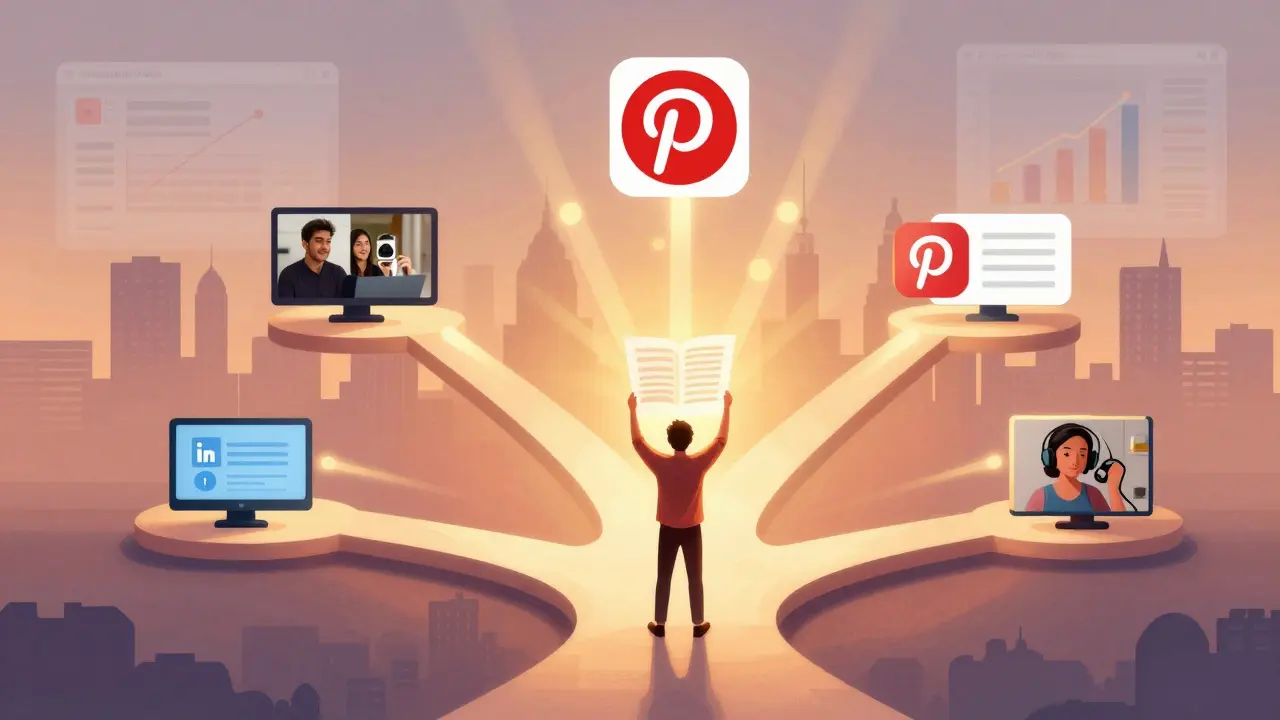
Why write five new posts when one post can earn you $5,000? Take your top-performing affiliate content and turn it into:
- A YouTube video
- A Pinterest infographic
- An email sequence
- A LinkedIn carousel
- A podcast episode
One affiliate marketer turned a single blog post into 17 pieces of content. He reused the same data, same stories, same links. He didn’t create new work - he multiplied his results. His monthly affiliate income jumped from $3,200 to $9,100 in three months.
Use tools like Canva a graphic design tool for creating social media visuals to turn blog sections into shareable images. Use Descript an audio and video editing tool for repurposing content to turn a long-form video into 60-second clips.

Test, Don’t Guess
The difference between average earners and top earners? Testing. Top earners run small experiments every week.
Try a new headline. Test two different product placements. Change the color of your CTA button. Swap out your affiliate link placement - above the fold vs. in the middle. Track the results.
One affiliate tested two versions of a product review: one with a video embedded, one without. The video version had a 38% higher click-through rate. He didn’t assume. He tested. That one change increased his monthly earnings by $2,100.
Set up a simple A/B test every two weeks. Use free tools like Google Optimize a website optimization tool for testing variations or even just split traffic manually. You don’t need a team. You just need curiosity.
What to Avoid
- Don’t promote too many products on one page - it confuses people.
- Don’t use fake testimonials. They get found. Your reputation is everything.
- Don’t ignore compliance. The FTC requires clear affiliate disclosures. Say it plainly: “I earn a commission if you buy through my link.”
- Don’t chase trends that don’t fit your audience. If you’re a finance blogger, don’t suddenly start promoting TikTok makeup products.
One affiliate got banned from Amazon Associates for using clickbait headlines. He didn’t realize his audience trusted him because he was honest. He lost $14,000 in monthly income. Don’t be that person.
Start Small. Stay Consistent.
You don’t need 100,000 visitors to make $5,000 a month. You need 500 people who trust you enough to click. Start with one product. One piece of content. One email list. One test. Do it well. Then do it again.
Top earners didn’t start with million-dollar campaigns. They started with one honest review. One helpful email. One test that worked. They kept going. That’s the secret.
How long does it take to make money with affiliate marketing?
Most people start seeing consistent income between 6 and 12 months. It depends on how much time you put in, the niche, and whether you’re optimizing content. Some make their first $100 in 30 days. Others take a year. The key isn’t speed - it’s consistency. Focus on building trust and testing what works, not on getting rich overnight.
Do I need a website to do affiliate marketing?
You don’t absolutely need a website, but it’s the most reliable way to earn long-term. Social media platforms can remove your account. Google can de-rank your videos. But if you own a website, you control your audience. A simple blog with 10 well-written posts can earn more than a TikTok account with 100,000 followers. If you’re serious, start with a website.
Which affiliate programs pay the most?
It’s not about the highest payout - it’s about the best fit. Programs like Amazon Associates pay low commissions (1-5%) but have huge traffic. Programs like Kajabi or ConvertKit pay 30-40% commissions but require a more targeted audience. Look for programs with recurring commissions. If someone signs up for a $29/month software and stays for a year, you earn $348. That’s better than a one-time $100 payout.
Can I do affiliate marketing without spending money?
Yes. You can start with free tools: WordPress.com (free plan), Canva, Google Analytics, and Mailchimp’s free tier. You can write blog posts, record videos on your phone, and use free social media to promote. The real cost isn’t money - it’s time. You’ll need to invest 10-15 hours a week for the first six months. If you’re willing to do that, you can start with $0.
Is affiliate marketing still worth it in 2026?
Absolutely. Affiliate marketing is growing, not dying. More brands are shifting away from ads and toward trusted influencers. People are tired of ads. They want recommendations from real people. The key is to focus on niche audiences, not mass traffic. If you can build trust in a specific area - like sustainable parenting, home brewing, or budget travel - you’ll earn more than someone trying to appeal to everyone.