
The Evolution of Internet Marketing: From Banners to AI-Powered Personalization
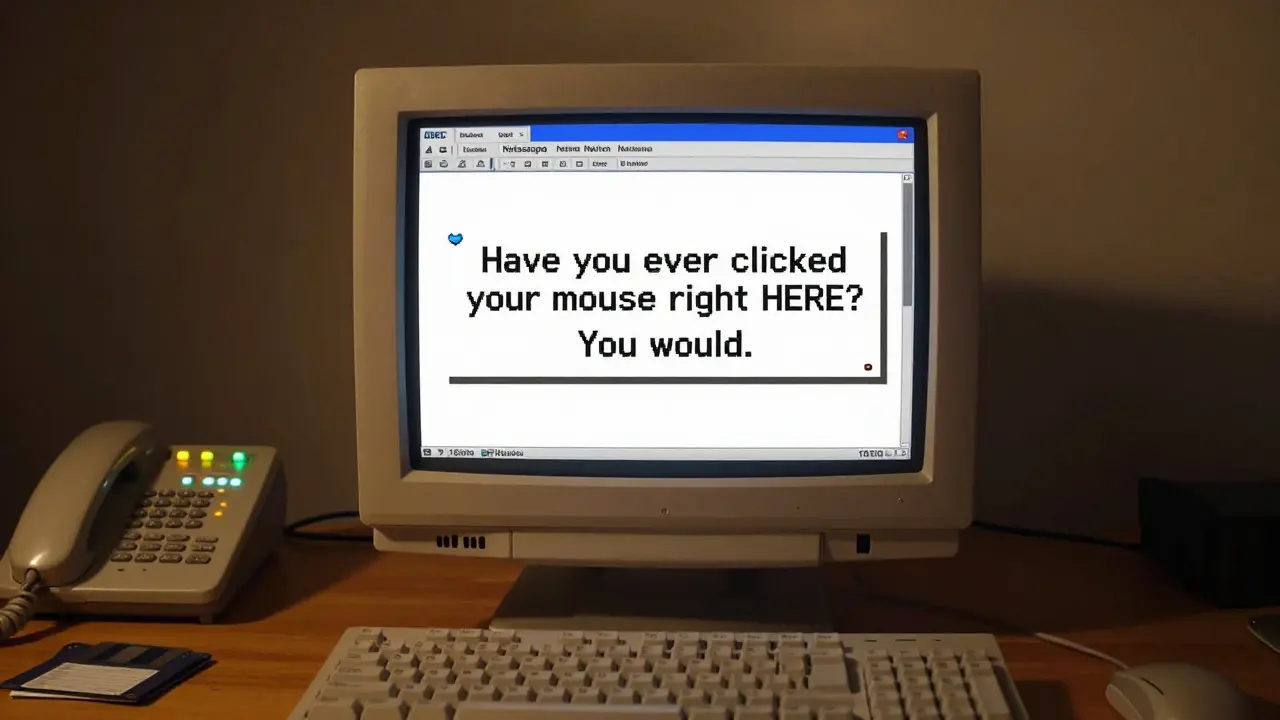
Back in 1994, the first online ad was a simple banner that looked like a broken webpage. It ran on HotWired and got clicked by 44% of people who saw it-unthinkable today. That ad didn’t just sell a product; it started a revolution. Internet marketing has changed more in 30 years than traditional marketing did in the last 300. What started as a novelty is now the backbone of how businesses reach customers, and it’s still evolving faster than most can keep up.
Early Days: The Wild West of Online Ads
In the mid-90s, internet marketing meant placing static banners on websites that barely loaded. There were no algorithms, no tracking pixels, no A/B tests. Companies bought ad space based on how many people visited a site-clicks were a bonus, not a metric. The first email spam campaign, sent in 1994 by a law firm advertising green cards, got 600 replies. It was illegal, but nobody had laws yet.
Search engines were primitive. AltaVista and Yahoo! Directory were the main ways people found things. If your business didn’t have a website by 1998, you were invisible. Websites were built in HTML editors like Netscape Composer. No CMS. No plugins. Just raw code and hope.
Marketing was broad, not targeted. You didn’t know if the person clicking your ad was a 23-year-old student or a 58-year-old CEO. You just hoped for the best. Conversion rates? Often below 0.1%. But it was cheap. And for the first time, small businesses could compete with big brands without a TV budget.
The Rise of Search and the Google Era
Everything changed when Google launched in 1998. By 2002, it was clear: search wasn’t just a tool-it was a gateway to intent. People weren’t browsing anymore. They were looking for something specific. That’s when pay-per-click advertising (PPC) exploded. AdWords, launched in 2000, let advertisers bid on keywords like “buy running shoes” or “best laptop 2005.”
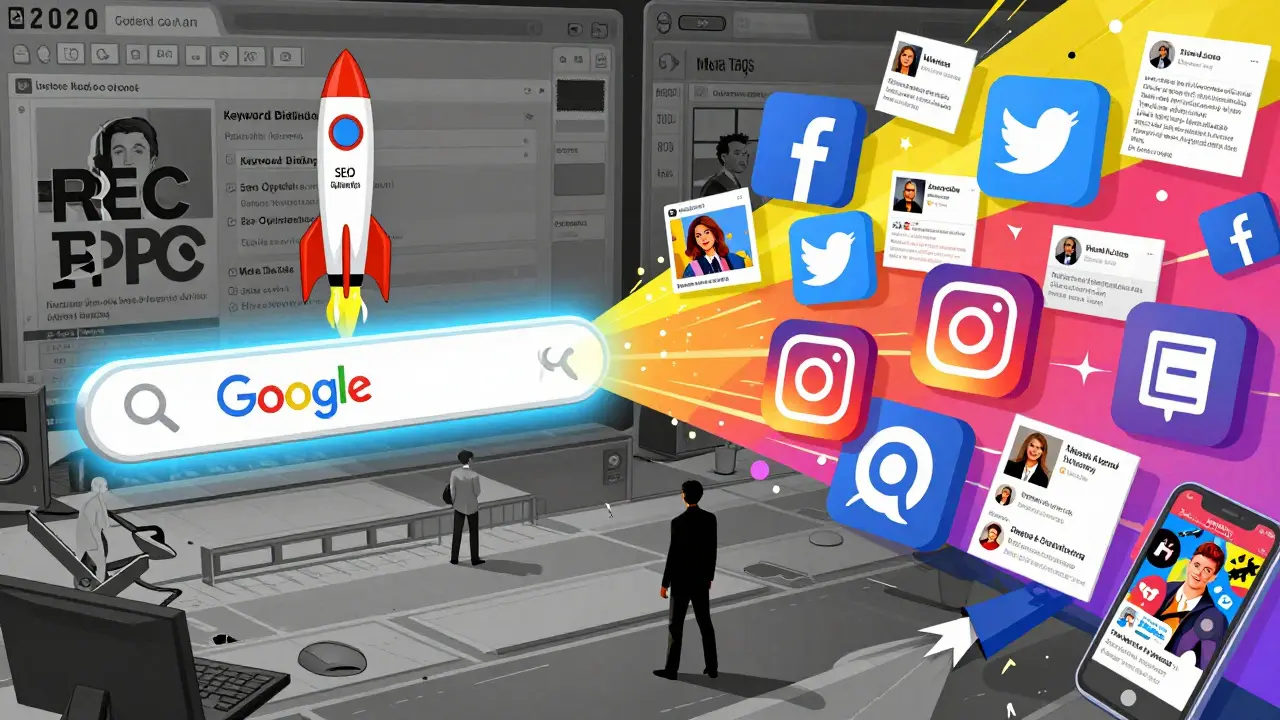
Suddenly, marketing became measurable. You could see which keywords drove sales, which ads got ignored, and which landing pages turned visitors into customers. SEO became a real job. Companies hired specialists to optimize meta tags, build backlinks, and write content that ranked. Google’s algorithm updates-like Panda in 2011 and Penguin in 2012-punished spammy tactics and rewarded quality. Marketers had to stop gaming the system and start helping users.
By 2010, Google Ads and organic search were the two biggest drivers of online traffic. Email marketing got smarter too. Tools like Mailchimp let businesses send personalized emails based on behavior. If someone abandoned a cart, they got a reminder. If they downloaded an ebook, they got a follow-up series. Automation was no longer sci-fi-it was standard.
Social Media Turns Marketing Into a Conversation
Facebook launched in 2004. Twitter in 2006. Instagram in 2010. These weren’t just social networks-they became marketing channels. Suddenly, brands had to talk like humans, not corporations. A tweet could go viral. A bad customer service reply could destroy a reputation overnight.
Facebook Ads, introduced in 2007, let marketers target users by age, location, interests, even job titles. You could show an ad for baby strollers only to women aged 25-35 who had recently searched for “nursery ideas.” That kind of precision was unheard of in TV or print.
By 2015, influencers started replacing celebrities. A single Instagram post from a micro-influencer with 10,000 followers could outsell a national TV campaign. TikTok, which exploded after 2018, turned marketing into short-form entertainment. Brands didn’t just advertise-they created memes, dances, and challenges. The line between content and ads blurred. People didn’t mind being sold to if the ad felt like fun.
Video became king. YouTube ads, Facebook Reels, Instagram Stories-all of them pushed marketers to produce fast, engaging, mobile-friendly content. The average attention span dropped from 12 seconds in 2000 to 8 seconds in 2020. If your video didn’t grab attention in the first two seconds, it was skipped.
The AI Revolution: Marketing That Thinks for Itself
By 2024, AI wasn’t just a buzzword-it was the engine behind most digital marketing. Tools like ChatGPT, Jasper, and Adobe Firefly write ad copy, design banners, and even generate product descriptions. AI analyzes millions of data points to predict who’s likely to buy, when they’ll buy, and what message will work best.
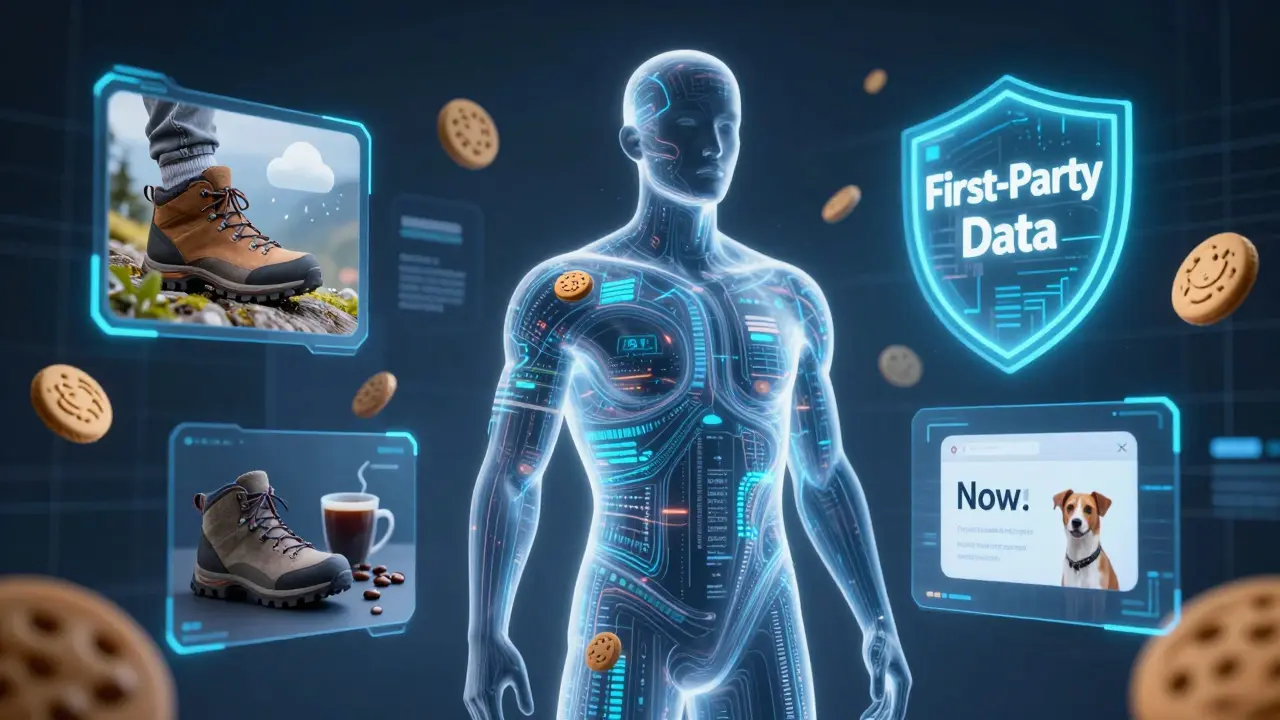
Dynamic ads now adjust in real time. If you’re browsing for hiking boots on your phone, the next ad you see on Instagram might show the same boots in snow, rain, and desert-each version optimized for your weather, past purchases, and even your social circle’s buying habits. AI doesn’t guess. It learns.
Chatbots handle 60% of customer service inquiries on e-commerce sites. They don’t just answer FAQs-they upsell. “You bought a coffee maker. Would you like beans that pair with it?” That’s not scripted. That’s AI analyzing your behavior and suggesting next steps.
Programmatic advertising now buys ad space automatically across thousands of sites, using real-time bidding. A brand might pay $0.02 to show an ad to one person who’s likely to convert, while another gets a $2 ad because they’ve been researching luxury watches for weeks. Cost per acquisition dropped by 40% between 2020 and 2025 for companies using AI-driven campaigns.
The Future: Predictive, Private, and Personal
What’s next? Privacy is tightening. Apple’s ATT framework and Google’s phase-out of third-party cookies mean marketers can’t track users across sites like they used to. The answer? First-party data. Brands are asking customers directly: “What do you want?” through quizzes, surveys, and loyalty programs. In return, they offer discounts, early access, or exclusive content.
Augmented reality (AR) is becoming a shopping tool. IKEA’s app lets you see how a sofa looks in your living room. Sephora’s Virtual Artist lets you try on lipstick with your phone camera. By 2027, 70% of beauty and home goods brands will use AR for product visualization.
Generative AI will create hyper-personalized content at scale. Imagine receiving an email that’s written just for you-mentioning your dog’s name, your last vacation spot, and the book you read last month. It’s not a template. It’s AI trained on your behavior, your preferences, your tone. And it’s already happening.
But here’s the catch: people are tired of being tracked. The future belongs to marketers who build trust, not just algorithms. Transparency matters. If you use AI to personalize, tell users how. Let them opt out. Let them control what data you use. Those who respect privacy will win. Those who push too hard will be ignored-or worse, blocked.
What You Need to Do Now
If you’re running a business today, you don’t need to be a tech expert. But you do need to understand the basics:
- Collect first-party data-ask for emails, run polls, offer value in exchange for info.
- Test AI tools-try ChatGPT for ad copy, Canva’s AI for graphics, or Google’s Performance Max for automated ads.
- Focus on mobile-first content-if your site isn’t fast and easy on a phone, you’re losing customers.
- Be human-no matter how smart the tech gets, people buy from people they trust.
Internet marketing isn’t about the latest tool. It’s about understanding people. The banners of 1994 didn’t win because they were flashy. They won because they were new. The AI of 2026 won’t win because it’s complex. It’ll win because it makes customers feel seen.
What was the first internet ad ever shown?
The first internet ad appeared on HotWired in October 1994. It was a banner ad for AT&T with the message "Have you ever clicked your mouse right HERE? You would." It had a 44% click-through rate, which is still one of the highest ever recorded for a digital ad.
How did Google change internet marketing?
Google turned marketing from broad exposure to intent-based targeting. Before Google, ads reached people who happened to be online. After Google, ads reached people actively searching for products or services. Google Ads allowed businesses to pay only when someone clicked, and its algorithm rewarded helpful, relevant content-making SEO a core part of marketing strategy.
Why are third-party cookies being phased out?
Third-party cookies tracked users across websites without their explicit consent, raising major privacy concerns. Apple, Google, and regulators pushed for change. Google plans to fully remove support by late 2026. This forces marketers to rely on first-party data-information users willingly share-making transparency and trust more important than tracking.
Can small businesses compete with big brands in modern internet marketing?
Absolutely. Tools like Canva, Mailchimp, Meta Ads Manager, and free AI writing assistants level the playing field. A local bakery can run targeted Facebook ads for $5 a day and reach people within 5 miles. A small SaaS company can use SEO and content marketing to rank for niche keywords that big brands ignore. Agility and authenticity often beat budget.
What’s the biggest mistake businesses make in internet marketing today?
Trying to automate everything and losing the human touch. AI can write ads, schedule posts, and analyze data-but it can’t build trust. Customers still want to feel understood. The most successful brands use tech to enhance personal connection, not replace it. A quick reply to a comment, a handwritten note in a package, or a video from the founder still beats a perfectly optimized chatbot.