Internet Marketing Guide: How to Scale Your Business Online in 2026

The Invisible Engine Powering Modern Growth
Most people think a great product is enough to win. But in a world where everyone has a smartphone glued to their palm, having a great product without a digital presence is like opening a luxury boutique in the middle of a desert. You might have the best goods on earth, but nobody knows you exist. Internet Marketing is the practice of leveraging online channels, tools, and strategies to drive traffic, generate leads, and increase sales. It isn't just about posting a few photos on a social feed; it's a calculated system designed to find where your customers hang out and give them a reason to buy from you instead of the guy next door.
If you're still relying on word-of-mouth or a physical storefront, you're leaving money on the table. The real secret weapon of successful businesses isn't a magic trick-it's a diversified digital ecosystem that works 24/7. Whether you're a local plumber or a global SaaS founder, the goal is the same: be the answer to the question your customer is typing into a search bar right now.
Quick Wins for Immediate Impact
- Audit your landing pages: If it takes more than 3 seconds to load, 40% of your visitors will leave.
- Claim your Google Business Profile: Essential for any business with a physical location.
- Start an email list: You don't own your followers on social media, but you own your email list.
- Optimize for voice search: More people are asking Alexa or Siri for recommendations than ever before.
Mastering the Art of Search Visibility
You can have the most beautiful website in the world, but if it's on page 10 of Google, it's effectively invisible. This is where SEO (Search Engine Optimization) comes in. Think of SEO as the process of proving to a search engine that your content is the most authoritative and helpful answer for a specific query. It's not about "tricking" the algorithm anymore; it's about providing genuine value.
To win at search in 2026, you need to move beyond simple keywords. Google now focuses on User Intent. If someone searches for "best running shoes," they aren't looking for a history of footwear; they want a comparison list. If you provide a 5,000-word essay on rubber soles, you'll never rank. You need to deliver the format the user expects-be it a list, a video, or a tool.
A huge part of this is Backlinks, which are hyperlinks from other websites to your own. When a high-authority site like the New York Times or a respected industry blog links to you, it's like a digital vote of confidence. The more quality votes you have, the higher you climb. But beware: buying cheap links from "link farms" is the fastest way to get your site penalized or removed from search results entirely.
The Power of Content That Actually Converts
Stop thinking of content as "stuff to post." Start thinking of it as a sales funnel. Content Marketing is the strategic creation of free value to attract and retain a clearly defined audience. The mistake most businesses make is shouting "BUY NOW" in every post. That's not marketing; that's spamming.
The secret is the 80/20 rule: 80% of your content should help the user solve a problem for free, and 20% should tell them how your product solves it permanently. For example, if you sell high-end skincare, don't just post product shots. Write a guide on "Why Your Skin Gets Dry in Winter" and explain the science behind hydration. Once the reader trusts your expertise, they'll be far more likely to buy your moisturizer.
Different formats serve different purposes in the funnel. Short-form videos are great for awareness-they stop the scroll. Long-form articles are for consideration-they build trust. Case studies and testimonials are for the final decision-they prove you can actually deliver the results you promise. If you only use one of these, you're missing a huge chunk of your potential market.
Turning Traffic into Revenue with CRO
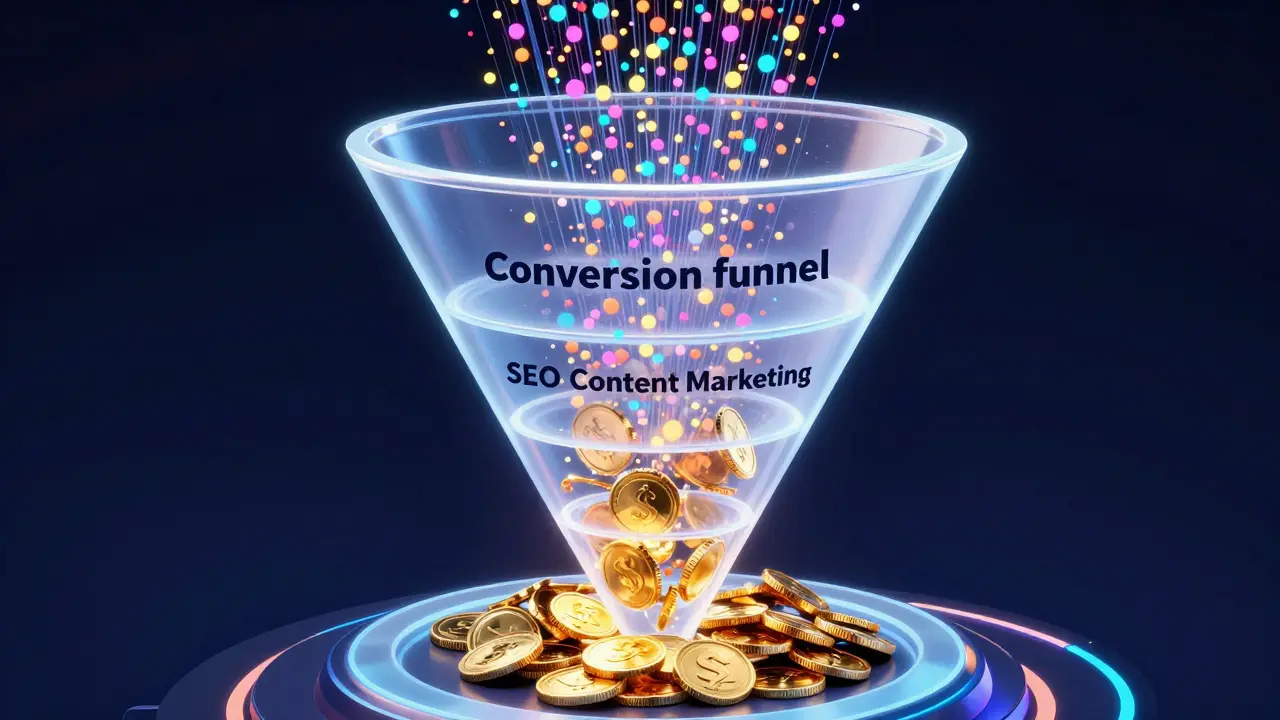
Traffic is a vanity metric. You can have a million visitors, but if your bank account is empty, those visitors are useless. This is where Conversion Rate Optimization, or CRO, becomes your best friend. CRO is the systematic process of increasing the percentage of users who take a desired action on a website.
Small changes often lead to massive wins. Changing a button color from gray to a high-contrast orange or moving a sign-up form from the bottom of the page to the top can sometimes increase conversions by 10-20%. It's all about removing friction. Every extra click a user has to make is an opportunity for them to change their mind and leave.
One of the most effective CRO tools is the A/B Test. Instead of guessing which headline works better, you run two versions of a page simultaneously. You send 50% of your traffic to Version A and 50% to Version B. The data tells you the winner, removing the ego and guesswork from the design process. If Version B results in 5% more sales, that's a permanent increase in your revenue without spending another dime on ads.
| Channel | Primary Goal | Speed of Results | Long-term Value |
|---|---|---|---|
| SEO | Organic Visibility | Slow (Months) | Extremely High |
| PPC (Paid Ads) | Instant Traffic | Immediate | Low (Stops when budget ends) |
| Social Media | Brand Awareness | Medium | Medium |
| Email Marketing | Customer Retention | Fast | High |
Navigating the Paid Landscape
Organic growth is great, but it takes time. If you need sales today, you turn to PPC, which stands for Pay-Per-Click advertising. The most dominant player here is Google Ads, which allows you to bid on specific keywords so your website appears at the very top of the search results.
The danger of paid ads is the "money pit" effect. Many businesses throw thousands of dollars at ads without a proper tracking system. If you don't know your Customer Acquisition Cost (CAC), you're gambling, not marketing. You need to know exactly how much it costs to get one lead and whether the Lifetime Value (LTV) of that customer justifies the spend.
Beyond search, social ads on platforms like Meta or TikTok allow for hyper-granular targeting. You can target a 30-year-old woman in Canberra who loves organic gardening and follows three specific influencers. This level of precision ensures your budget is spent on people who actually fit your buyer persona, rather than a broad audience that will never buy.
Building Lasting Loyalty with Email and Automation
The biggest mistake a business can make is treating a customer like a one-time transaction. It is significantly cheaper to keep an existing customer than to acquire a new one. This is why Email Marketing remains the highest ROI channel in the digital world. While social media algorithms change and can hide your posts, an email lands directly in a user's personal inbox.
The key here is Segmentation. You shouldn't send the same email to everyone on your list. A new lead who just signed up for a free guide needs a different message than a loyal customer who has bought from you five times. By splitting your list into segments, you can send personalized offers that feel like a conversation rather than a broadcast.
Automation takes this a step further. A "Welcome Sequence" triggers automatically the moment someone joins your list. A "Abandoned Cart" email reminds a shopper that they left something behind. These automated workflows ensure no lead falls through the cracks, allowing you to generate revenue while you sleep.
Common Pitfalls to Avoid
Many businesses fail in their digital journey because they chase "hacks" instead of foundations. Chasing the latest viral trend on a new social platform might give you a temporary spike in views, but it won't build a sustainable business. A viral video with 1 million views is worthless if none of those viewers are your target customers.
Another trap is ignoring the mobile experience. With a majority of web traffic now coming from mobile devices, a site that looks great on a desktop but is clunky on a phone is a liability. Google uses Mobile-First Indexing, meaning it looks at the mobile version of your site to determine your ranking. If your mobile site is slow or hard to navigate, your desktop rankings will suffer too.
Finally, stop obsessing over vanity metrics. Likes, shares, and followers feel good, but they don't pay the rent. Focus on Conversion Rate and Return on Ad Spend (ROAS). If your followers are growing but your sales are flat, your marketing strategy is broken. You need to align your digital activities with your actual business goals-whether that's more phone calls, more sign-ups, or more direct sales.
How long does it take to see results from SEO?
SEO is a long-term game. For most businesses, it takes between 3 to 6 months to start seeing a noticeable increase in organic traffic. This timeline depends on your competition level, the quality of your content, and how authoritative your website currently is. While paid ads provide instant results, SEO builds a compounding asset that generates "free" traffic for years.
Which is better: Google Ads or Facebook Ads?
It depends on your goal. Google Ads are "intent-based," meaning you reach people actively searching for a solution. This usually leads to higher conversion rates. Facebook and Instagram Ads are "interest-based," meaning you are introducing your product to people who might like it but aren't necessarily looking for it right now. Use Google for immediate demand and Social Ads for brand awareness and demand generation.
Do I really need a blog for my business website?
Yes, if you want to rank for keywords other than your brand name. A blog allows you to target "long-tail keywords"-specific questions your customers are asking. Instead of just ranking for "Accounting Firm," a blog lets you rank for "how to do small business taxes in Australia," which brings in a highly targeted audience that views you as an expert.
Is email marketing dead in the age of social media?
Far from it. Email marketing is actually more important than ever because you own the data. Social media platforms can change their algorithms overnight, cutting your reach by 90%. Your email list is an asset you control entirely, making it the most reliable way to drive repeat business and maintain direct communication with your clients.
What is a good conversion rate for a landing page?
While it varies by industry, an average conversion rate is typically between 2% and 5%. However, a high-performing landing page optimized for a specific offer can see conversion rates of 10% to 20%. If you are below 2%, it usually indicates a disconnect between your ad messaging and the landing page content, or a technical issue slowing down the site.
Next Steps for Your Digital Strategy
If you're overwhelmed, start with the lowest-hanging fruit. First, ensure your website is fast and mobile-friendly. Second, identify the top five questions your customers always ask and write a detailed, helpful blog post for each one. This solves a user problem and gives search engines something to index.
Once the foundation is set, pick one acquisition channel-like SEO or Paid Ads-and master it before adding another. Trying to be everywhere at once (TikTok, LinkedIn, Google, Email) usually leads to mediocre results across the board. Focus on where your target audience spends 80% of their time, dominate that space, and then expand your reach from there.