How ChatGPT is Revolutionizing Online Marketing
Five years ago, marketers spent hours writing email subject lines, tweaking ad copy, and brainstorming blog ideas. Today, many of those tasks take minutes - thanks to ChatGPT. It’s not just a tool that writes faster. It’s changing how brands think about communication, customer engagement, and scalability in digital marketing.
ChatGPT is rewriting content creation
Before AI, content teams had to hire writers, wait for drafts, and go through multiple rounds of edits. Now, a marketing manager in Boston can type a prompt like "Write a 300-word email for a fitness brand targeting women 35-45 who want to lose weight without dieting" and get a polished draft in under 10 seconds. The quality? It’s not perfect, but it’s good enough to use as a starting point - saving 4 to 6 hours per piece.
Companies like Sephora and Nike use ChatGPT to generate product descriptions at scale. Instead of writing 500 unique descriptions for new skincare items, they feed in product specs and let the AI handle the first draft. Human editors then polish tone, add brand voice, and fix inaccuracies. The result? 70% faster content production with no drop in conversion rates, according to a 2025 internal audit from a Fortune 500 beauty brand.
Personalization at scale isn’t a dream anymore
Personalized marketing used to mean segmenting audiences into broad groups: men 25-34, urban professionals, etc. ChatGPT changes that. It can generate unique messaging for thousands of individual customers - all based on their past behavior.
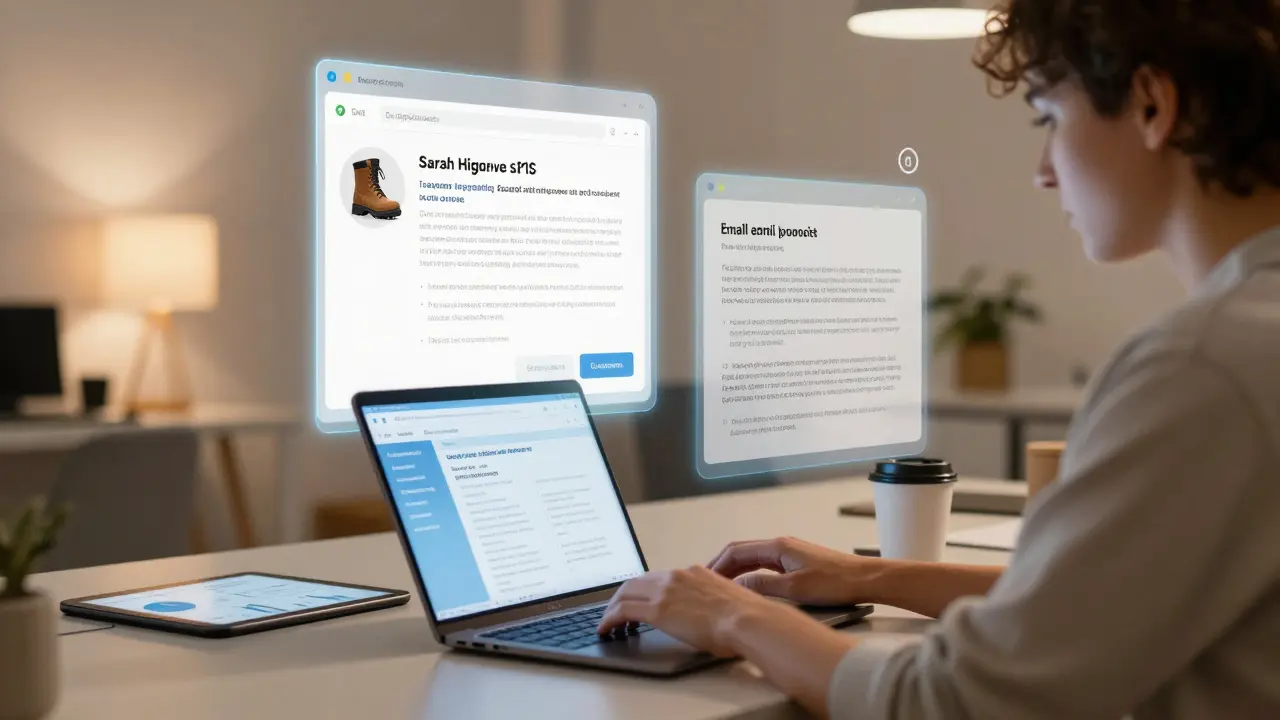
Imagine a customer who browsed hiking boots but didn’t buy. ChatGPT can analyze their previous clicks, purchase history, and even weather data in their ZIP code to write a custom message: "Hey Sarah, snow’s coming to Boston this week. Your favorite trail at Blue Hills will be icy. These waterproof boots have 4.8 stars from 2,300 hikers. Only 3 left in size 8."
Brands using this approach report 2.5x higher open rates and 1.8x more clicks than generic blasts. The key? It doesn’t feel like spam. It feels like a friend reminding you.
Chatbots that actually understand you
Old chatbots answered with canned responses: "I’m sorry, I can’t help with that." ChatGPT-powered bots now handle complex questions - from tracking orders to explaining return policies - in natural, conversational language.
A Shopify store selling eco-friendly baby products saw customer service inquiries drop by 62% after switching to a ChatGPT-driven assistant. The bot didn’t just answer questions. It recommended products based on what the parent had already bought, suggested bundles, and even apologized in a warm tone when there was a shipping delay.
These bots don’t replace humans. They handle the 80% of routine questions, freeing staff to deal with angry customers, complex complaints, and high-value sales. That shift alone boosted customer satisfaction scores by 31% in six months.

SEO isn’t dead - it’s smarter
People still think AI-generated content hurts SEO. That’s outdated. Google doesn’t punish AI content. It punishes low-quality, repetitive, or spammy content - whether it’s written by a human or a machine.
ChatGPT helps marketers create SEO-rich content that actually ranks. For example, a small dental clinic in Atlanta used ChatGPT to generate 12 blog posts targeting long-tail keywords like "how to stop gum bleeding at home" or "best toothbrush for sensitive gums 2026". Each post was based on real patient questions pulled from their website’s FAQ. The AI wrote the first draft. The dentist reviewed it, added personal stories, and published. Within three months, organic traffic from those posts increased by 190%.
The secret? ChatGPT doesn’t write for algorithms. It writes for people. And when you pair it with real expertise, it becomes a powerful SEO engine.
Ads that convert without A/B testing
Running 10 versions of an ad to see which one works? That’s the old way. ChatGPT can generate dozens of variations in seconds - and predict which ones will perform best.
One e-commerce brand selling protein powder tested 50 ad headlines generated by ChatGPT. Instead of waiting for data, they fed the headlines into a simple prompt: "Which of these 10 headlines is most likely to make a busy dad in his 40s click?" The AI ranked them by emotional appeal, clarity, and urgency - based on patterns from millions of consumer interactions.
The top three headlines were used in Meta and Google Ads. Click-through rates jumped 47% compared to their previous top performer. No A/B testing required. Just smart prompting.
Marketing teams are shrinking - and getting better
Marketers aren’t being replaced. They’re being upgraded.
A startup in Austin cut its content team from 8 people to 3. But instead of producing less, they now publish 3x more blogs, 5x more social posts, and 10x more personalized emails - all with the same budget. How? Each person uses ChatGPT to handle research, drafting, and editing. They focus on strategy, brand voice, and customer feedback.
That’s the real revolution: AI doesn’t remove creativity. It removes busywork. The best marketers today aren’t writers or designers. They’re prompt engineers - people who know how to ask the right questions to get the best answers.
What ChatGPT can’t do (and why humans still matter)
ChatGPT can’t feel empathy. It doesn’t understand cultural nuance. It can’t read the silence in a customer’s voice when they say, "I just don’t know if I can afford it."
It also doesn’t know your brand’s soul. If you let it write your entire voice without guidance, your emails will sound like every other brand. Generic. Lifeless. Forgettable.
The best results come from collaboration: AI for speed and scale. Humans for heart and strategy. A marketer who uses ChatGPT to draft 100 product descriptions, then picks the 5 that match their brand’s tone, adds a personal story, and sends them to top customers? That’s the future.
How to start using ChatGPT in your marketing today
You don’t need to be a tech expert. Here’s how to begin:
- Start with one task: email subject lines, product descriptions, or social captions.
- Give clear prompts. Include audience, tone, length, and goal. Example: "Write a 150-word Instagram caption for a vegan protein bar targeting college students. Use casual, humorous tone. Mention energy and budget-friendly."
- Always edit. AI is a co-writer, not a replacement.
- Track results. Compare performance before and after using AI.
- Scale slowly. Add one more use case every two weeks.
Within 60 days, you’ll be doing what took your team months - in hours.
What’s next?
ChatGPT is just the beginning. By 2027, AI will predict customer needs before they ask. It’ll generate video scripts from voice notes. It’ll design landing pages based on your sales data. But the core won’t change: great marketing still needs human insight.
The brands that win won’t be the ones using the most AI. They’ll be the ones using AI the smartest - blending speed with soul, data with empathy, automation with authenticity.
Can ChatGPT replace human marketers?
No. ChatGPT handles repetitive tasks like drafting emails, writing product descriptions, or generating ad copy. But it can’t build brand strategy, understand emotional nuance, or make ethical decisions. Human marketers are still needed to guide tone, interpret customer feedback, and ensure messaging aligns with company values.
Is AI-generated content bad for SEO?
No. Google doesn’t penalize content just because it’s made by AI. It penalizes low-quality, thin, or spammy content - no matter who writes it. The key is to use ChatGPT as a tool to create helpful, original, and well-edited content that answers real customer questions. Add your expertise, personal stories, and unique insights to make it stand out.
How much time can ChatGPT save in marketing?
Marketers report saving 4 to 6 hours per piece of content - whether it’s an email, blog post, or social caption. For teams that produce 10-20 pieces a week, that adds up to 40-120 hours monthly. That’s the equivalent of one full-time employee’s workload - without hiring anyone.
What are the biggest mistakes people make with ChatGPT in marketing?
The biggest mistake is using it without editing. AI can sound generic, overly formal, or factually wrong. Another mistake is using it for everything - like customer service replies that need empathy or brand messaging that requires deep cultural understanding. Always review output, add your voice, and test results before scaling.
Do I need to pay for ChatGPT to use it in marketing?
You can start with the free version, but the paid version (ChatGPT Plus) is better for marketing. It offers faster responses, access to GPT-4, better memory for longer conversations, and the ability to upload files like spreadsheets or past campaign data. For serious marketers, the $20/month fee pays for itself in saved time.
If you’re not using ChatGPT in your marketing yet, you’re not falling behind - you’re just working harder than you need to. The tools are here. The data is clear. The question isn’t whether to use AI. It’s how soon you’ll start using it well.