
Digital Marketing: The Bridge to Business Success in 2026

You might have heard the phrase a thousand times. Digital marketing is the bridge to business success. But if you are sitting there wondering why your ads aren't converting or why your social media posts get zero engagement, that bridge feels more like a gap you can't jump. The truth is, digital marketing isn't magic. It's not about posting pretty pictures and hoping for the best. It is a precise mechanism for connecting human needs with business solutions.
In 2026, the landscape has shifted again. We are past the era of simple SEO tricks and basic Facebook ads. Today, it is about data integrity, AI-driven personalization, and genuine community building. If you treat digital marketing as an afterthought, you will lose. If you treat it as the central nervous system of your business, you win. Here is how to actually build that bridge.
The Foundation: Understanding Your Audience
Before you spend a single pound on advertising, you need to know who you are talking to. This sounds obvious, yet most businesses skip this step because they are eager to launch. They assume everyone wants their product. They don't.
You need to create detailed buyer personas. These are not just demographics like "women aged 25-34." That is too vague. A buyer persona includes psychographics. What keeps them up at night? What values do they hold? Where do they hang out online?
- Pain Points: What specific problem does your product solve?
- Goals: What does success look like for them?
- Objections: Why would they hesitate to buy from you?
For example, if you sell ergonomic office chairs, your persona isn't just "office workers." It is "remote software developers who suffer from back pain and value long-term health over initial cost savings." Knowing this changes everything. It dictates your messaging, your imagery, and even the platform you choose to advertise on.
Content Strategy: Value Before Sales
People hate being sold to. They love learning. Content marketing is the engine that drives trust. In 2026, generic blog posts written by AI without human oversight are penalized by search engines and ignored by readers. You need authentic, expert content.
Your content should answer questions before your customers even ask them. If you run a bakery, don't just post photos of cakes. Write guides on "How to Choose the Right Cake for a Wedding" or "The Science Behind Sourdough." This positions you as an authority, not just a vendor.
Use a mix of formats to capture different types of learners:
- Video: Short-form videos on TikTok or Instagram Reels for quick tips.
- Blogs: Long-form articles for deep dives and SEO ranking.
- Email Newsletters: Personal updates and exclusive offers for loyal followers.
Remember, every piece of content should serve a purpose in the customer journey. Are you attracting new visitors? Nurturing leads? Or closing sales? Map your content to these stages.
Search Engine Optimization (SEO): Getting Found
Search Engine Optimization is the practice of optimizing your website to rank higher in search engine results pages (SERPs) remains one of the most powerful tools for organic growth. However, SEO in 2026 is less about keyword stuffing and more about user experience and semantic relevance.
Google and other search engines want to show users the best possible answer. If your site is slow, hard to navigate on mobile, or filled with pop-ups, you will be buried. Focus on Core Web Vitals. Ensure your page loads in under two seconds. Make sure your text is readable and your images are optimized.
Also, think about intent. When someone searches for "best running shoes," they are likely ready to buy. When they search for "how to tie running shoes," they are looking for information. Tailor your landing pages to match that intent. Don't try to sell shoes to someone who just wants to learn how to tie them.
Social Media: Building Community, Not Just Followers
Social media is often misunderstood as a broadcast channel. It is not. It is a conversation. Brands that succeed on platforms like LinkedIn, Instagram, and X (formerly Twitter) are those that engage, not just post.
Reply to comments. Ask questions in your captions. Run polls. Show the human side of your business. People connect with people, not logos. Share behind-the-scenes content. Introduce your team. Talk about your failures and what you learned from them. Vulnerability builds trust.
Choose the right platforms for your audience. B2B companies thrive on LinkedIn. Visual brands like fashion or food do well on Instagram and Pinterest. If you target Gen Z, you need to be on TikTok. Don't try to be everywhere. Be where your customers are.
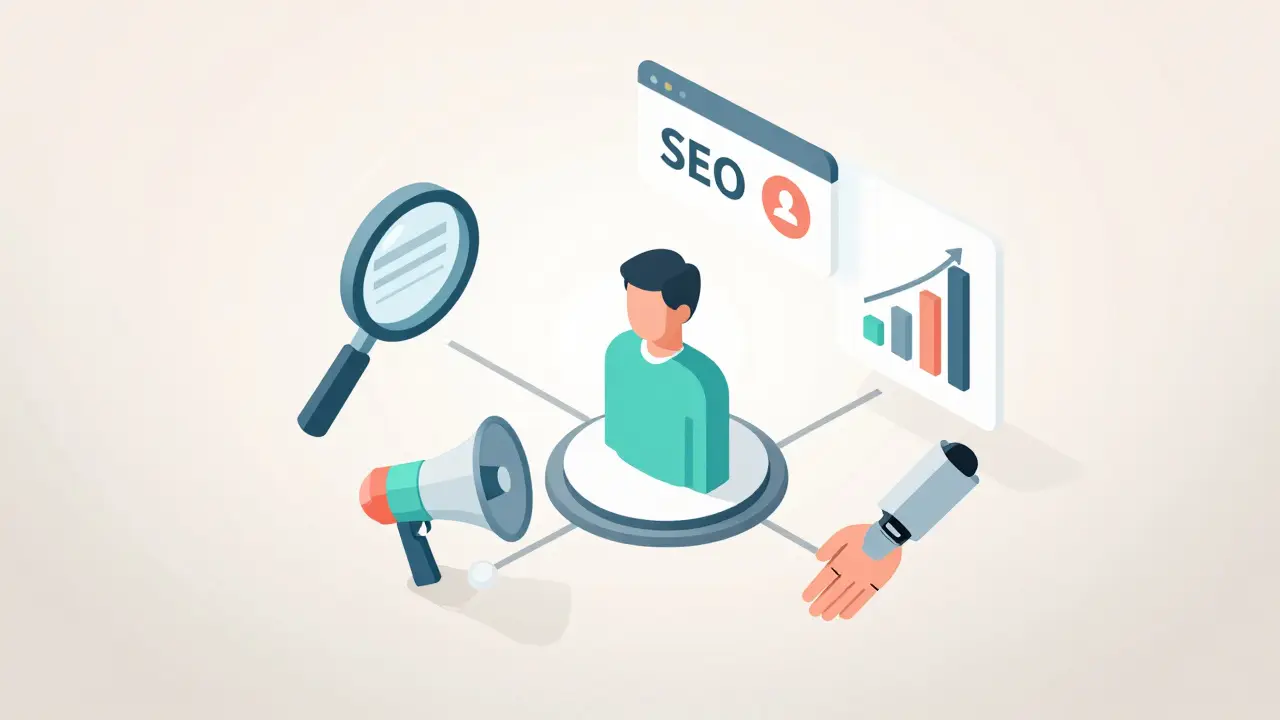
Paid Advertising: Precision Targeting
Organic growth takes time. Paid advertising accelerates it. Platforms like Google Ads and Meta Ads allow you to target users based on incredibly specific criteria. But spending money on ads without a strategy is burning cash.
Start with clear goals. Do you want brand awareness? Lead generation? Direct sales? Your goal determines your campaign structure. For lead generation, you might offer a free ebook in exchange for an email address. For direct sales, you might retarget users who visited your product page but didn't buy.
Monitor your metrics closely. Key performance indicators (KPIs) include:
- Cost Per Click (CPC): How much you pay for each click.
- Conversion Rate: The percentage of clicks that result in a desired action.
- Return on Ad Spend (ROAS): The revenue generated for every pound spent on ads.
If your ROAS is negative, stop the campaign and analyze why. Is your ad creative weak? Is your landing page confusing? Test different variables to improve performance.
Data Analytics: Making Decisions Based on Facts
You cannot improve what you do not measure. Data Analytics the process of examining datasets to draw conclusions about the information they contain is the compass for your digital marketing efforts. Tools like Google Analytics 4 provide insights into user behavior, traffic sources, and conversion paths.
Look beyond vanity metrics like likes and shares. Focus on metrics that impact your bottom line. How many visitors become customers? What is the average order value? Which channels drive the highest quality traffic?
Use A/B testing to optimize your campaigns. Test different headlines, images, and calls to action. Small changes can lead to significant improvements in conversion rates. For example, changing a button color from blue to green might increase clicks by 10%. Over time, these small wins add up.
Artificial Intelligence: The New Assistant
Artificial Intelligence technology that enables computers and machines to simulate human learning, comprehension, problem solving, decision making, creativity and autonomy is transforming digital marketing. AI tools can help you write copy, generate images, and predict customer behavior. But they are assistants, not replacements.
Use AI to automate repetitive tasks. Let it draft email subject lines or schedule social media posts. But always add a human touch. Review the output. Ensure it aligns with your brand voice. Authenticity still matters. Customers can spot robotic content from a mile away.
AI can also help with personalization. Analyze past purchase history to recommend products. Send personalized emails based on user behavior. This level of customization increases engagement and loyalty.
| Channel | Best For | Cost | Time to Results |
|---|---|---|---|
| SEO | Long-term organic traffic | Low (time-intensive) | Slow (3-6 months) |
| PPC Ads | Immediate traffic and sales | High | Fast (days) |
| Social Media | Brand awareness and community | Medium | Medium (weeks) |
| Email Marketing | Nurturing leads and retention | Low | Medium (depends on list size) |

Integrating the Pieces: A Cohesive Strategy
Digital marketing channels do not work in isolation. They work together. A cohesive strategy ensures that your message is consistent across all touchpoints. Your social media posts should drive traffic to your blog. Your blog should capture emails. Your emails should promote your products.
Create a customer journey map. Visualize the path a user takes from discovering your brand to making a purchase. Identify gaps in this journey. Where do users drop off? Why? Fix these leaks to improve conversion rates.
Collaborate across departments. Marketing should talk to sales. Customer support should share feedback with marketing. Silos kill growth. Break them down.
Common Pitfalls to Avoid
Even experienced marketers make mistakes. Here are some common pitfalls to watch out for:
- Ignoring Mobile Users: More than half of web traffic comes from mobile devices. If your site isn't mobile-friendly, you are losing potential customers.
- Overcomplicating Messages: Keep it simple. Confused buyers don't buy. Use clear, concise language.
- Neglecting Email Lists: Social media algorithms change. Your email list is an asset you own. Build it and nurture it.
- Set-and-Forget Mentality: Digital marketing requires constant monitoring and adjustment. What worked last month might not work today.
Measuring Success: Beyond Vanity Metrics
Success looks different for every business. Define your key performance indicators early on. Are you measuring brand awareness? Customer acquisition cost? Lifetime value?
Use dashboards to track progress. Tools like HubSpot, Salesforce, or even simple spreadsheets can help you visualize data. Regularly review your performance. Celebrate wins. Learn from losses. Adjust your strategy accordingly.
Remember, digital marketing is a marathon, not a sprint. Consistency is key. Keep showing up. Keep providing value. Keep listening to your customers. The bridge to business success is built one brick at a time.
What is the most important aspect of digital marketing in 2026?
The most important aspect is understanding your audience. Without knowing who you are targeting, no amount of SEO, ads, or content will yield sustainable results. Data-driven personalization and authentic engagement are critical components of this understanding.
How much should I spend on digital marketing?
There is no one-size-fits-all answer. Generally, small businesses spend 7-12% of their revenue on marketing. Start with a budget that allows you to test different channels. Focus on return on investment (ROI) rather than absolute spend. Scale what works.
Is SEO still relevant in the age of AI?
Yes, absolutely. While AI changes how search engines interpret queries, the core principle remains: provide high-quality, relevant content that answers user questions. SEO helps your content get discovered. It is a long-term strategy that complements paid advertising.
Which social media platform is best for B2B businesses?
LinkedIn is generally the best platform for B2B businesses. It allows you to connect with professionals, share industry insights, and generate leads through targeted advertising. However, depending on your niche, Twitter/X or even Instagram might also be effective.
How can I measure the success of my email marketing campaigns?
Key metrics include open rate, click-through rate (CTR), conversion rate, and unsubscribe rate. Open rate indicates how compelling your subject line is. CTR shows how engaging your content is. Conversion rate measures how many recipients took the desired action. Unsubscribe rate helps you gauge if your frequency or content is annoying subscribers.