
Digital Marketing 101: The Complete Beginner's Guide for 2026

Most people think Digital Marketing is just posting on social media or running ads. It’s not. It’s a data-driven ecosystem where every click, scroll, and purchase leaves a digital footprint you can measure, analyze, and optimize. If you’re new to this field, the sheer volume of tools and jargon can feel overwhelming. But once you break it down into core channels and fundamental principles, it becomes manageable-and incredibly powerful.
This guide cuts through the noise. We’ll look at the essential components of a modern marketing stack, how they interact, and what actually moves the needle in 2026. Whether you’re a small business owner trying to get your first lead or a marketer looking to refine your strategy, these are the building blocks you need.
The Core Channels That Matter Right Now
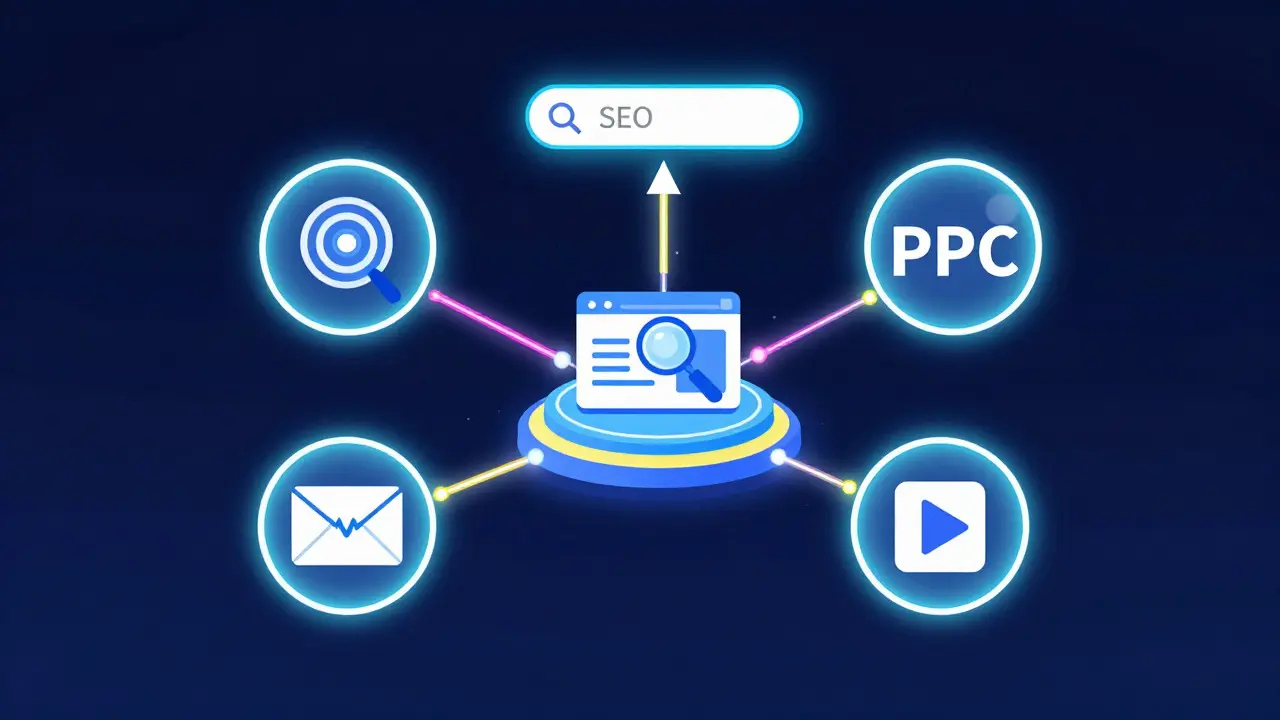
You don’t need to be everywhere. You need to be where your customers are. In 2026, the landscape has shifted slightly toward shorter-form video and direct-to-consumer engagement, but the fundamentals remain consistent. Here are the primary channels that form the backbone of most successful strategies:
- Search Engine Optimization (SEO): This is the art of getting your website to rank high in search results without paying for clicks. Think of it as long-term equity. When someone searches for "best hiking boots for wet weather," you want to be the answer. SEO involves technical site health, keyword research, and creating content that genuinely answers user questions. It’s slow to start but compounds over time.
- Paid Advertising (PPC): If SEO is planting trees, PPC is buying fruit. Pay-per-click campaigns on platforms like Google Ads or Meta allow you to show up instantly. It’s expensive if done poorly, but highly scalable when targeted correctly. The key here is precision-you pay for every click, so waste is costly.
- Email Marketing: Despite being one of the oldest digital channels, email still boasts the highest return on investment (ROI). Why? Because you own the list. Algorithms change, ad costs rise, but an email address stays with you. Use it for nurturing leads, announcing launches, and retaining existing customers.
- Social Media Marketing: This isn’t just about brand awareness anymore; it’s about community building. Platforms like TikTok and Instagram have become search engines for younger demographics. Short-form video dominates, but static carousels and live streams still drive engagement for specific niches.
Understanding the Customer Journey
A common mistake beginners make is treating all traffic the same. Not all visitors are ready to buy. To market effectively, you need to map out the journey a customer takes from "I have a problem" to "I bought your solution." This is often visualized as a funnel.
- Awareness: The prospect doesn’t know they have a problem or knows they do but hasn’t found a solution yet. Your job here is visibility. Blog posts, viral videos, and broad-targeted ads work well here.
- Consideration: They know their problem and are researching solutions. They might compare brands. Here, you need trust-building content: case studies, webinars, comparison guides, and detailed product demos.
- Decision: They’re ready to buy but need a push. This is where retargeting ads, limited-time offers, and clear calls-to-action (CTAs) come in. Friction kills conversions, so keep this stage simple.
Each stage requires different messaging. Trying to sell a $500 course to someone who just discovered your blog post is like asking for marriage on the first date. Match your content to their mindset.
Content Strategy: Quality Over Quantity
Content is the fuel for almost every digital channel. But "more content" isn’t always better. In 2026, audiences are smarter and more skeptical than ever. They can smell fluff from a mile away. Your content needs to solve a specific problem or provide genuine entertainment.
Start by identifying your target audience’s pain points. Don’t guess-ask them. Look at support tickets, social comments, and review sections of competitors. What are they complaining about? What questions are they asking repeatedly? Those are your content topics.
When creating content, focus on the E-E-A-T factors: Experience, Expertise, Authoritativeness, and Trustworthiness. Search engines and humans both value signals that you know what you’re talking about. Cite sources, share personal anecdotes, and use data to back up claims. A generic article saying "social media is important" adds zero value. An article explaining exactly how to structure a LinkedIn carousel for B2B SaaS companies adds significant value.
Measuring Success: Metrics That Actually Count
If you can’t measure it, you can’t improve it. But beware of vanity metrics. Likes, shares, and impressions look good on paper, but they rarely correlate directly with revenue. Instead, focus on these key performance indicators (KPIs):
| Metric | What It Tells You | Why It Matters |
|---|---|---|
| Conversion Rate | Percentage of visitors who take desired action | Indicates how effective your landing pages and offers are |
| Customer Acquisition Cost (CAC) | Total cost to acquire one new customer | Helps determine if your ad spend is profitable |
| Lifetime Value (LTV) | Total revenue expected from a single customer | Tells you how much you can afford to spend on acquisition |
| Organic Traffic Growth | Change in non-paid website visits | Shows the long-term impact of your SEO efforts |
The golden rule is that LTV should ideally be at least three times your CAC. If it’s lower, you’re burning cash. If it’s higher, you have room to scale your advertising budget aggressively.
Common Pitfalls to Avoid
Even experienced marketers fall into traps. Here are the most common ones for beginners:
- Chasing Trends Blindly: Just because everyone is using AI-generated images doesn’t mean you should. If it doesn’t fit your brand voice or audience preference, skip it. Trends fade; brand identity lasts.
- Ignoring Mobile Optimization: Over 70% of web traffic now comes from mobile devices. If your site loads slowly or looks broken on a phone, you’re losing half your potential customers before they even read your headline.
- No Clear Call-to-Action: Visitors need to know what to do next. "Learn More" is vague. "Get Your Free Audit" is specific. Every page should have one primary goal.
- Not Testing Anything: Assume nothing works until proven otherwise. Change one element at a time-button color, headline text, image choice-and see what happens. Small tweaks can lead to massive gains.
Building Your First Campaign: A Step-by-Step Approach
Ready to put theory into practice? Here’s a simplified framework for launching your first integrated campaign:
- Define Your Goal: Be specific. Not "increase sales," but "get 50 qualified leads for our webinar by end of month."
- Identify Your Audience: Create a persona. Who are they? What do they care about? Where do they hang out online?
- Choose Your Channel: Pick one or two channels to start. Don’t spread yourself thin. If your audience is on LinkedIn, focus there. If they search for solutions on Google, prioritize SEO and PPC.
- Create Compelling Content: Develop a message that resonates with their pain point. Ensure it’s visually appealing and easy to consume.
- Set Up Tracking: Before you launch, make sure you can track where leads come from. Use UTM parameters on your links and set up conversion tracking in your analytics tool.
- Launch and Monitor: Go live. Check your daily reports. Is the click-through rate low? Adjust your creative. Is the conversion rate low? Improve your landing page.
Remember, marketing is iterative. Your first campaign won’t be perfect. That’s okay. The goal is to learn, adjust, and improve. Data is your best friend in this process.
Frequently Asked Questions
How much does digital marketing cost for a small business?
It varies widely. Organic methods like SEO and social media management can start with just your time and basic tools (under $500/month). Paid advertising depends on your industry and competition, but many small businesses start with a budget of $1,000-$3,000 per month to see meaningful results. The key is starting small and scaling what works.
Is SEO still relevant in 2026?
Yes, absolutely. While AI summaries appear in search results more often, users still click through to authoritative sites for detailed information. SEO has evolved to focus more on topical authority and user intent rather than just keyword stuffing. It remains one of the most cost-effective long-term strategies available.
Which social media platform is best for B2B marketing?
LinkedIn remains the dominant platform for B2B connections and decision-making. However, Twitter (now X) is still valuable for real-time industry conversations, and niche communities on Slack or Discord can be powerful for targeted engagement. Choose based on where your specific buyers spend their professional time.
Do I need a website to do digital marketing?
While you can run ads directly to a checkout page or email signup, a website serves as your central hub for credibility, SEO, and detailed content. It allows you to control the narrative and capture leads independently of third-party platforms that may change their algorithms or fees.
How long does it take to see results from digital marketing?
Paid ads can generate leads within days. Email marketing shows immediate response rates. SEO typically takes 3-6 months to gain traction. Social media builds awareness gradually. A realistic expectation is to see initial insights in 30 days and significant growth trends after 3-6 months of consistent effort.