
ChatGPT for Social Media Marketing: The Ultimate Guide to Content & Strategy

Social media moves fast. Too fast. One minute you are posting a reel, the next minute the algorithm has changed again, and your engagement is flatlining. If you are a Social Media Manager (SMM) or a small business owner trying to keep up with Instagram, LinkedIn, and TikTok, you know the burnout is real. You need fresh ideas daily, captions that convert, and a voice that sounds human-not robotic.
This is where ChatGPT changes the game. It is not just a chatbot; it is an engine for creativity and efficiency. By using this AI tool correctly, you can cut your content planning time in half while actually improving the quality of your posts. We will look at how to use ChatGPT to write better copy, plan months of content in minutes, and handle customer service without losing your mind.
The Reality of Modern Social Media Work
Let’s be honest about what SMM looks like today. It is no longer just about posting a photo and hoping for the best. It requires data analysis, community management, video editing, and constant trend watching. A typical manager might spend four hours a day just writing captions and replying to comments. That leaves zero time for strategy or creative thinking.
OpenAI, the company behind ChatGPT, created a model based on large language processing. This means it understands context, tone, and nuance better than any previous tool. For marketers, this translates to one thing: speed without sacrificing quality. You do not have to start from a blank page anymore. You have a partner that can brainstorm, draft, and refine ideas instantly.
However, there is a trap. Many people use ChatGPT lazily. They type "write a post about coffee" and get generic, soulless text. The secret is not the tool itself, but how you talk to it. This is called prompt engineering, and it is the skill that separates good results from great ones.
Mastering Prompt Engineering for SMM
If you want ChatGPT to work for you, you need to give it clear instructions. Think of it like hiring a new intern. If you say "do some marketing," they will stare at you. If you say "write a LinkedIn post targeting CTOs about cybersecurity risks, using a professional but urgent tone," you get gold.
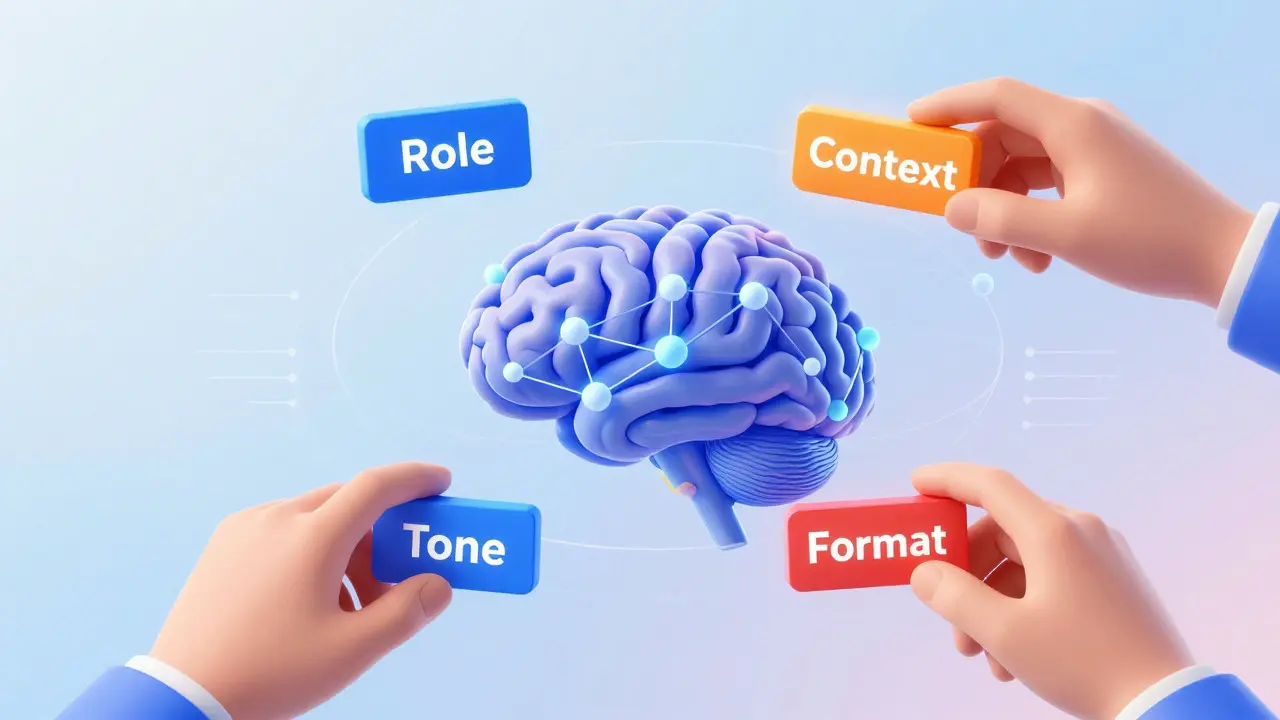
Here is a simple formula for high-quality prompts:
- Role: Tell the AI who it is. (e.g., "Act as an expert Social Media Strategist.")
- Context: Give background info. (e.g., "We sell organic skincare to women aged 30-45.")
- Task: Be specific. (e.g., "Write 5 Instagram captions focusing on hydration benefits.")
- Tone: Set the vibe. (e.g., "Friendly, empowering, and concise.")
- Format: Define the output. (e.g., "Include emojis and a call-to-action.")
When you combine these elements, the output shifts from vague suggestions to ready-to-publish content. You save time by iterating quickly. Ask for variations. Ask it to shorten the text. Ask it to make it funnier. The back-and-forth conversation is where the magic happens.
Content Creation at Scale
The biggest bottleneck in social media is consistency. Posting once a week is not enough anymore. Most brands need to post daily, if not multiple times a day. ChatGPT allows you to batch-create content.
You can ask the AI to generate a month’s worth of ideas in one go. For example, you might input: "Create a 30-day content calendar for a fitness app. Include three themes: motivation, nutrition tips, and workout demos." The AI will provide a structured list. From there, you can dive deeper into each day, asking for specific captions, hashtags, and even script outlines for short videos.
This approach works well for platforms like LinkedIn, where long-form thought leadership is valued, and Twitter (now X), where quick, witty threads perform well. On visual platforms like Instagram and TikTok, ChatGPT helps with the hook and the description, which are crucial for SEO and engagement.
| Platform | Primary Use Case | Key Benefit |
|---|---|---|
| Thought leadership articles, professional updates | Structures complex ideas clearly | |
| Captions, hashtag research, story prompts | Boosts discoverability and engagement | |
| TikTok | Video scripts, hook generation, trend analysis | Creates viral-worthy openings |
| X (Twitter) | Threads, quick news commentary | Condenses information efficiently |
Maintaining Brand Voice
A common fear is that AI will make your brand sound like everyone else. Generic. Bland. To avoid this, you need to train ChatGPT on your specific voice. Create a "brand voice document" that defines your personality. Are you sarcastic? Professional? Warm? Energetic?
Paste examples of your best-performing posts into the chat. Tell the AI, "Analyze the tone and style of these three posts. Then, write five new posts using the same voice." This technique, known as few-shot learning, helps the model mimic your unique style. Over time, you will find that the AI becomes an extension of your own creativity rather than a replacement for it.
Remember, the AI does not know your inside jokes or recent company wins unless you tell it. Context is king. Always update the AI with current events, product launches, or seasonal trends relevant to your niche.
Data Analysis and Community Management
Social media is not just about creating; it is about listening. ChatGPT can help analyze feedback and sentiment. Copy and paste a list of customer comments or reviews into the chat. Ask the AI to categorize them by sentiment (positive, negative, neutral) and identify common themes.
For example, if you run a restaurant, you might see that many customers mention slow service. The AI can highlight this pattern instantly. You can then address it in your next post or improve operations internally. This turns raw data into actionable insights without needing a complex analytics dashboard.
It can also draft responses to difficult comments. Instead of getting emotional, you can ask the AI to write a polite, professional response to a negative review. This keeps your brand calm and composed under pressure.

Ethical Considerations and Best Practices
As we move further into 2026, transparency is becoming more important. Users appreciate honesty. While you do not necessarily need to label every AI-assisted post, it is wise to disclose when content is fully automated. Human oversight is still required. Always fact-check statistics and claims generated by the AI. Hallucinations-where the AI makes up facts-are still a risk, especially with niche topics.
Also, consider copyright issues. While most jurisdictions are still defining AI-generated content rights, adding significant human effort (editing, curating, directing) strengthens your claim to ownership. Treat the AI as a co-pilot, not the captain.
Future Trends in AI-Driven SMM
The landscape is evolving rapidly. We are seeing the rise of multimodal models that can generate images and videos alongside text. Tools like Midjourney for images and various video generators are integrating with text-based workflows. In the near future, you might describe a video concept to an AI, and it will generate the script, storyboard, and even the visual assets.
Personalization will also deepen. AI will help tailor messages to individual segments of your audience at scale. Imagine sending personalized DMs to hundreds of potential clients, each referencing their specific pain points. This level of hyper-personalization was impossible before advanced language models.
However, the core of social media remains connection. No matter how advanced the technology gets, people connect with people. Use AI to remove the friction of creation, so you can spend more time engaging authentically with your community.
Getting Started Today
You do not need a budget to start using ChatGPT for social media. Sign up for an account, define your brand voice, and start with small tasks. Try rewriting a single caption. Plan one week of content. Analyze ten customer reviews. Gradually increase the complexity as you become comfortable with prompting.
The goal is not to replace your creativity but to amplify it. By leveraging AI, you free yourself from the grind of repetitive tasks and allow space for strategic thinking and genuine human connection. That is how you take your social media marketing to new heights.
Is ChatGPT free for social media marketing?
Yes, there is a free tier available that offers substantial capabilities for basic content creation and brainstorming. However, paid plans like Plus or Pro offer faster speeds, priority access during peak times, and access to more advanced models like o1 or GPT-4o, which provide higher reasoning capabilities and better context retention.
Will my audience know if I used AI to write posts?
Not necessarily, provided you edit the output to match your brand voice. Raw AI text can sometimes feel generic or overly formal. By customizing the tone, adding personal anecdotes, and checking for factual accuracy, the final result should sound authentic. Transparency is growing, but quality human editing usually masks the AI origin.
Can ChatGPT generate hashtags effectively?
Yes, it can suggest relevant hashtags based on keywords and topics. However, because hashtag trends change rapidly, it is best to verify its suggestions against current platform trends. Use ChatGPT to build a base list, then refine it with tools native to Instagram or TikTok to ensure maximum reach.
How do I prevent AI hallucinations in my posts?
Always fact-check specific data points, dates, names, and statistics generated by the AI. Provide the AI with source material or links to reference when possible. Ask it to cite sources if it includes factual claims. Never publish statistical data or historical facts without verifying them independently.
What is the best prompt structure for viral content?
Focus on hooks and emotional triggers. A strong prompt might look like this: "Write 5 attention-grabbing hooks for a TikTok video about [topic]. Use curiosity gaps, surprising facts, or relatable pain points. Keep each hook under 10 words." Viral content often relies on psychology, so instruct the AI to target specific emotions like surprise, humor, or inspiration.